Plus get our latest book recommendations, author news, and competitions right to your inbox.
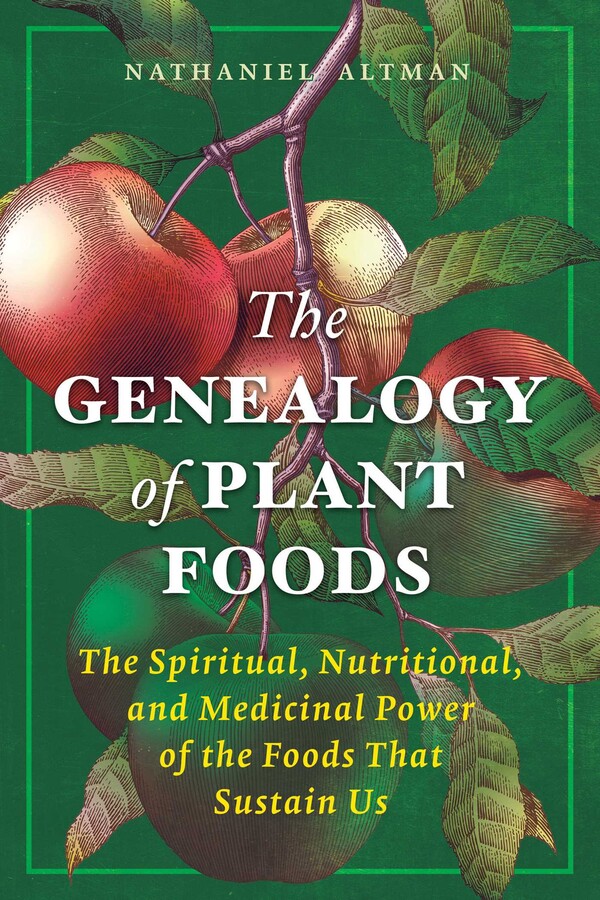
The Genealogy of Plant Foods
The Spiritual, Nutritional, and Medicinal Power of the Foods That Sustain Us
Published by Healing Arts Press
Distributed by Simon & Schuster
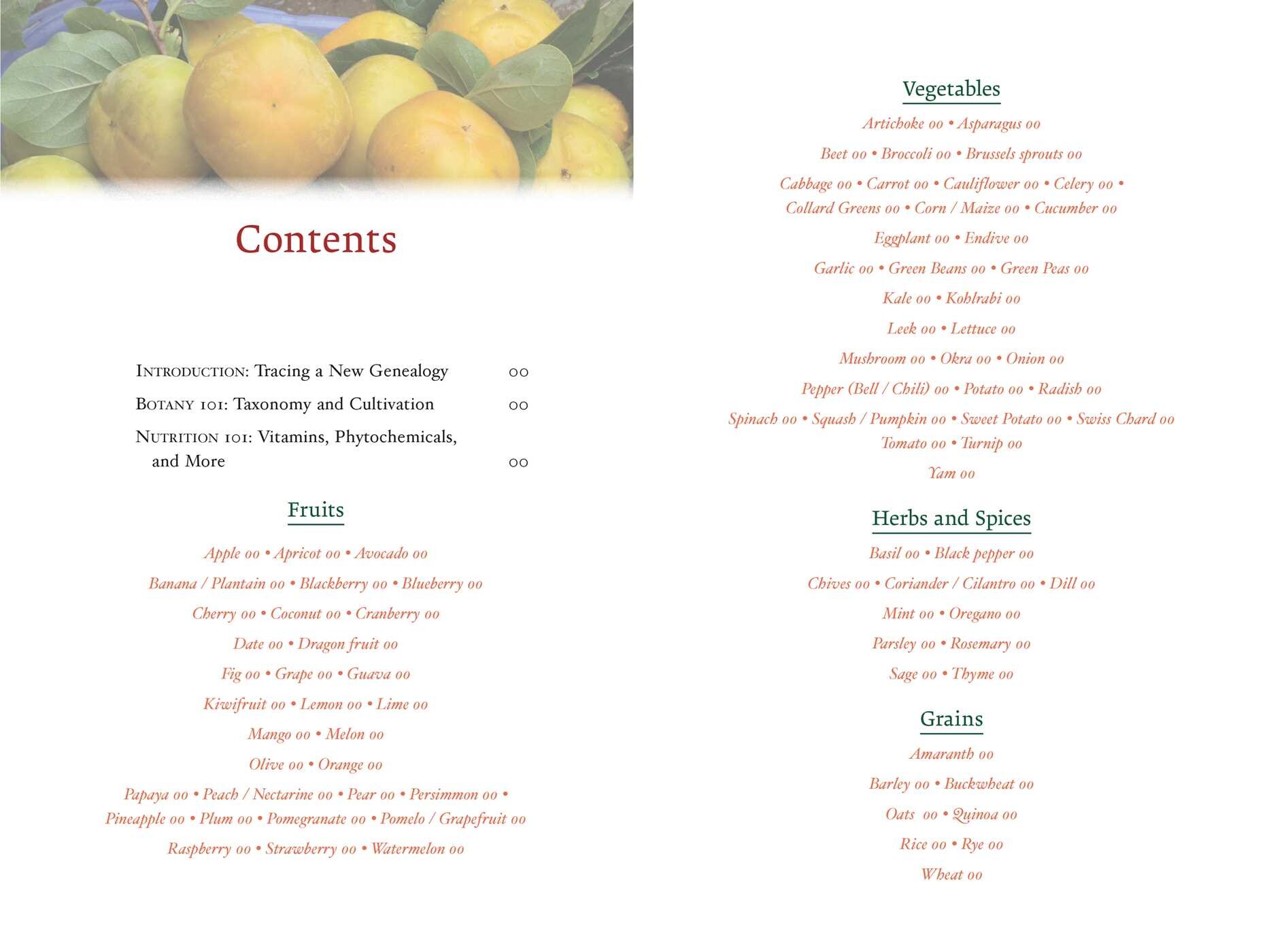
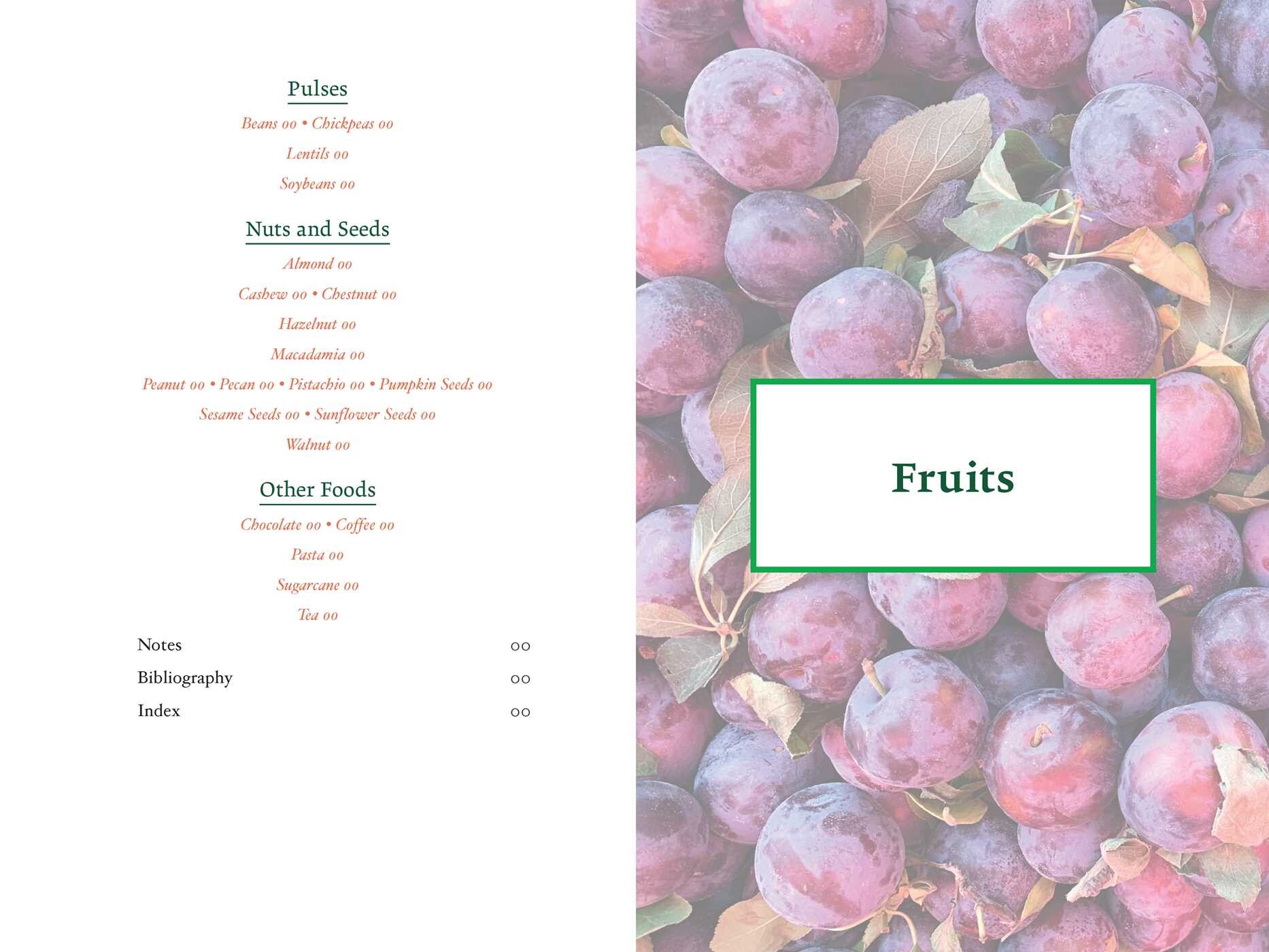
Table of Contents
About The Book
Reveals the origins, uses, and medicinal properties of over 100 plant foods
• Offers entries of 106 plant foods, including their origins, histories, and religious significance as well as culinary and medicinal uses
• Covers an extensive range of fruits, vegetables, grains, pulses, nuts and seeds, herbs and spices as well as “specialty” foods like chocolate, pasta, sugar, coffee, and tea
• Provides nutritional and healing properties, based on the latest scientific findings on nutriceuticals and phytochemicals, to present each food as a medicine
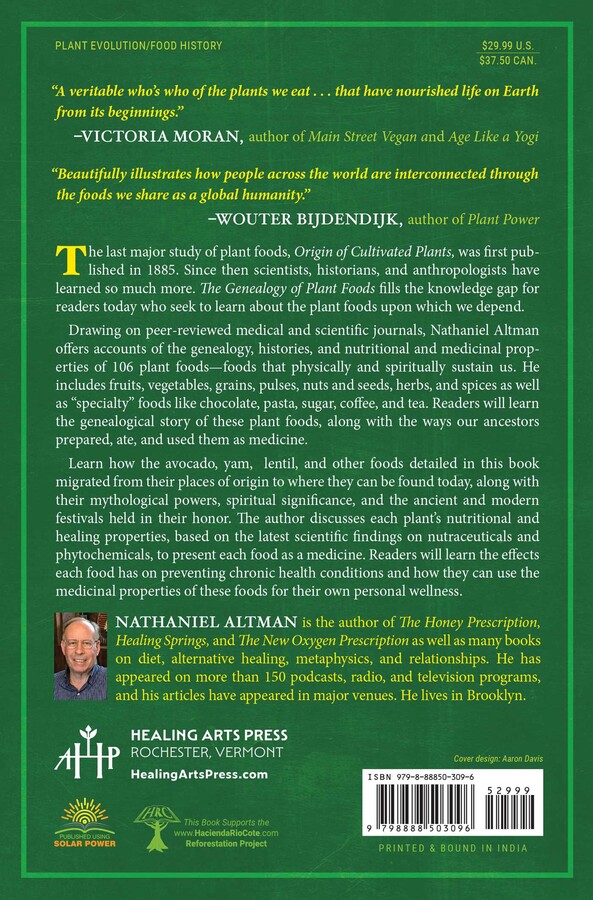
The last major study of plant foods, Origin of Cultivated Plants, was first published in 1885. Since then scientists, historians, and anthropologists have learned so much more. The Genealogy of Plant Foods fills the knowledge gap for readers today who seek to learn about the plant foods upon which we depend.
Drawing on peer-reviewed medical and scientific journals, Nathaniel Altman offers accounts of the genealogy, histories, and nutritional and medicinal properties of 106 plant foods—foods that physically and spiritually sustain us. He includes fruits, vegetables, grains, pulses, nuts and seeds, herbs, and spices as well as “specialty” foods like chocolate, pasta, sugar, coffee, and tea. Readers will learn the genealogical story of these plant foods, along with the ways our ancestors prepared, ate, and used them as medicine.
Learn how the avocado, yam, lentil, and other foods detailed in this book migrated from their places of origin to where they can be found today, along with their mythological powers, spiritual significance, and the ancient and modern festivals held in their honor. The author discusses each plant’s nutritional and healing properties, based on the latest scientific findings on nutraceuticals and phytochemicals, to present each food as a medicine. Readers will learn the effects each food has on preventing chronic health conditions and how they can use the medicinal properties of these foods for their own personal wellness.
• Offers entries of 106 plant foods, including their origins, histories, and religious significance as well as culinary and medicinal uses
• Covers an extensive range of fruits, vegetables, grains, pulses, nuts and seeds, herbs and spices as well as “specialty” foods like chocolate, pasta, sugar, coffee, and tea
• Provides nutritional and healing properties, based on the latest scientific findings on nutriceuticals and phytochemicals, to present each food as a medicine
The last major study of plant foods, Origin of Cultivated Plants, was first published in 1885. Since then scientists, historians, and anthropologists have learned so much more. The Genealogy of Plant Foods fills the knowledge gap for readers today who seek to learn about the plant foods upon which we depend.
Drawing on peer-reviewed medical and scientific journals, Nathaniel Altman offers accounts of the genealogy, histories, and nutritional and medicinal properties of 106 plant foods—foods that physically and spiritually sustain us. He includes fruits, vegetables, grains, pulses, nuts and seeds, herbs, and spices as well as “specialty” foods like chocolate, pasta, sugar, coffee, and tea. Readers will learn the genealogical story of these plant foods, along with the ways our ancestors prepared, ate, and used them as medicine.
Learn how the avocado, yam, lentil, and other foods detailed in this book migrated from their places of origin to where they can be found today, along with their mythological powers, spiritual significance, and the ancient and modern festivals held in their honor. The author discusses each plant’s nutritional and healing properties, based on the latest scientific findings on nutraceuticals and phytochemicals, to present each food as a medicine. Readers will learn the effects each food has on preventing chronic health conditions and how they can use the medicinal properties of these foods for their own personal wellness.
Excerpt
Introduction
Tracing a New Genealogy
People are fascinated by food. In addition to nourishing our bodies, food has played a major role in our cultural traditions, spiritual practices, literature, poetry, and art for thousands of years. Literally hundreds of cookbooks are published every year in the United States alone, and magazines, newspapers, TV programs, and internet blogs and vlogs focus on how to prepare and enjoy the vast variety of foods available to us from supermarkets, farmers markets, and backyard gardens. There has even been an increase in “food tourism,” where people travel primarily to experience both new and familiar types of cuisine. We are currently experiencing a resurgence in healthy eating, with more and more consumers demanding foods that are both delicious and good for their health.
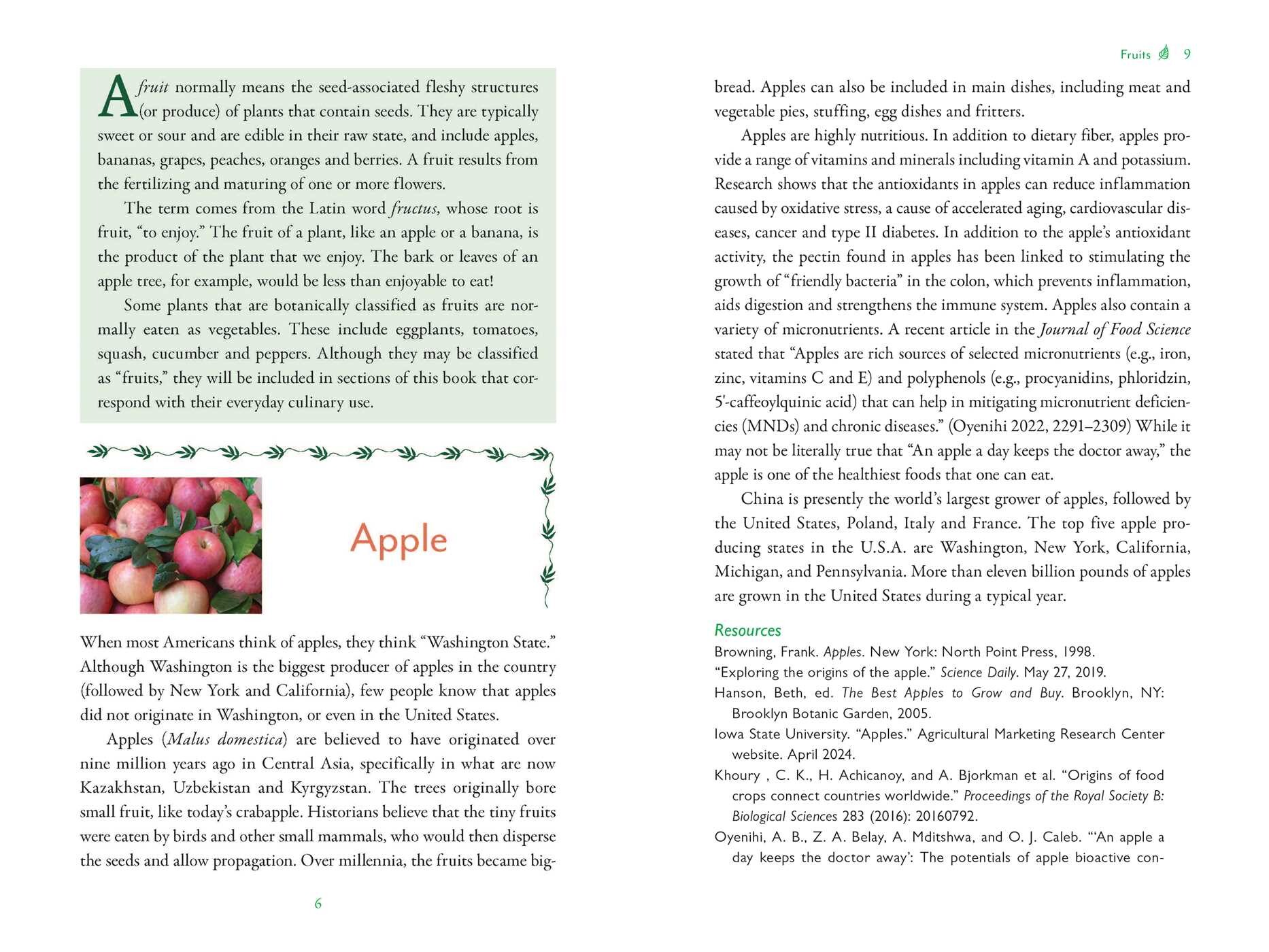
Despite the central role food plays in our lives, most people take the food we eat for granted. Many do not realize that every food we eat becomes part of the cells of our bodies. When we eat an apple, for example, the vitamins, minerals, fiber, and a wealth of phytochemicals— chemical compounds found in plant foods—are digested by our bodies, eventually becoming part of our body’s cells and playing a vital role not only in our survival but our good health as well. In fact, every plant food has been recognized throughout history as having medicinal value; recent science has not only validated many traditional beliefs, but is also exploring ways food can be used to both prevent and even treat a wide range of diseases including diabetes, heart problems, Alzheimer’s disease, and cancer. It should come as no surprise that many Indigenous communities around the world have recognized the vital connection between humans and food for millennia, and consider sitting down for a meal as a sacred act, a time for gratitude and respect.
Few understand the complex processes involved with bringing our food to the dining room table, from preparing the soil, planting and caring for the seeds, growing healthy plants, harvesting, packing, transportation, and finally the mechanics involved in selling foods at supermarkets, greengrocers, farm stands, and farmers markets. Unlike people living in parts of the world where nutritious food is often scarce, many who live in rich countries like the United States take food for granted. One result of this is that approximately 40 percent of the food we buy winds up in the garbage, uneaten.
Why This Book?
Like many others who are interested in genealogy, I devoted several years to investigating my family’s history. Although early family records have been impossible to locate, the information I was able to find about my ancestors was both fascinating and life-changing. By knowing about my family’s roots, I gained new insights into my own life’s path and gained tremendous respect for my ancestors, the difficulties they faced in Eastern Europe, and the sacrifices they made to establish new lives here in the United States. I owe my life to them, and am grateful.
As an author of several books about food and nutrition, I have always been interested in the origins of food, and during an extended period of self-isolation during the recent COVID-19 pandemic, I decided to learn more. To my surprise, I soon discovered that the vast majority of foods consumed in North America originally came from other parts of the world, just like most of our human ancestors. And I found that many of these “new immigrants” faced problems similar to those of our immigrant ancestors. For example, foods like tomatoes, eggplants, and potatoes were initially shunned due to the belief that they were poisonous, as they belong to a family of plants called nightshade, which includes the plant belladonna, also known as “deadly nightshade.” Eggplant was only accepted after Thomas Jefferson—who played a key role in American agriculture—served it to guests at the White House.
Like most people, I had no idea where most of our foods originally came from, and how they arrived to our shores. For example, most people assume chili peppers originated in Mexico, India, or Thailand, where they are an essential part of these national cuisines. Yet, recent anthropological and genomic research shows that chili peppers are actually indigenous to the Amazon Basin, and that their seeds spread north to Mexico—primarily by birds. The birds’ taste buds did not register the heat of the peppers, so they had no trouble eating them. And because their digestive systems could not digest the seeds, they were excreted as the birds migrated north, eventually taking root and growing into plants.
Human migration also helped to spread chili peppers. Cultivation of chili peppers began in Mexico, and Spanish explorers introduced them to Spain in the sixteenth century. From there, they were introduced to Africa, Europe, and Asia by traders along the famous Silk Road, and became staple crops in India, Thailand, and China.
While writing this book, I gained new and profound insight into the early beginnings of the foods we eat and about the long, complex, and often difficult journeys they made to new lands. When I eat a simple carrot, for example, I am now aware that its roots began in Turkiye and the Middle East, and that it was introduced to Europe—probably by Arab traders—over ten centuries ago. Carrots eventually made their way to the New World during the 1600s, when immigrants brought carrot seeds with them from Europe and planted them in their gardens. Over the next several hundred years, carrots became a major commercial crop in North America. I can now buy carrots at any greengrocer or supermarket; I can eat them raw, drink them as juice, or prepare them in a wide variety of soups, casseroles, and stir-fries. I now appreciate even more this food that nourishes and protects me (especially my eyesight). I will never take a carrot for granted again!
By getting to know the origins, history, and benefits we obtain from the foods we eat, I believe we will appreciate them more and not take them for granted. In addition, a deeper knowledge of foods and their culinary, nutritional, and health–related benefits can lead to making better choices for ourselves and our loved ones.
Although there is a lot of diverse information available about individual foods on blogs, food industry websites, and magazine articles, clear and simple information about the origins and histories of the plant foods we eat cannot been found in a single, easy to read, documented volume. Surprisingly, the last major work on the subject was The Origin of Cultivated Plants by French–Swiss botanist Alphonse de Candolle, originally published in 1883 and first translated to English in 1886.
In addition to anecdotal information about various foods, much new information about the history, nutritional value, and medicinal value of many of the foods we eat has only recently become available in often-obscure, peer-reviewed scientific, medical, and agricultural journals. This information is based on “new science,” including genomic research, DNA studies, and laboratory and clinical evidence. So, I decided to put all this information together in one comprehensive, documented, and reader-friendly volume.
The Need
At a time when life expectancy in the United States has declined and diet-related disease has become a leading cause of premature death, Americans need to make more conscious food choices, and eat more of the hundreds of healthy, nutritious, and delicious foods that are available to us. Yet, rather than tell people what they should eat, I aim to present information in a lively, historical, and anecdotal context to appeal to my readers’ innate curiosity. As a result, each section of this book is designed to offer clear and concise information about our favorite plant foods—more than one hundred of them. Each section will briefly describe each food, explore its origin(s) and how it arrived in different countries (with particular focus on the United States), how it is used, its nutritional and medicinal highlights, and where is it primarily grown today.
Each section is based on documented scientific and nutritional sources including medical journals and peer-reviewed scientific studies. This information will reacquaint readers with foods they may have known and loved since childhood, and also introduce them to new foods they may have never tasted before.
One of the major objectives of this book is to highlight the medicinal value of each food at a time when diet-related diseases compete with smoking as a leading cause of death. Although the idea of food as medicine dates back thousands of years to Hippocrates, the results of a new study published in the September 2023 issue of the medical journal Circulation, involving research on nearly four thousand people, showed conclusively that a diet rich in plant foods helps improve health by reducing glucose levels, blood pressure, “ bad” cholesterol, and body weight.
There is another current that underlies the importance of this book. During a time when people are dividing themselves from others along religious, racial, political, and national lines, food can be a great unifier. On one hand, many of the foods humans eat and love came from other countries: potatoes from Peru; avocados, corn, and beans from Mexico; peaches and oranges from China; apples from Kazakhstan–Kyrgyzstan; and blueberries, squash, and strawberries from the United States.
Tracing a New Genealogy
People are fascinated by food. In addition to nourishing our bodies, food has played a major role in our cultural traditions, spiritual practices, literature, poetry, and art for thousands of years. Literally hundreds of cookbooks are published every year in the United States alone, and magazines, newspapers, TV programs, and internet blogs and vlogs focus on how to prepare and enjoy the vast variety of foods available to us from supermarkets, farmers markets, and backyard gardens. There has even been an increase in “food tourism,” where people travel primarily to experience both new and familiar types of cuisine. We are currently experiencing a resurgence in healthy eating, with more and more consumers demanding foods that are both delicious and good for their health.
Despite the central role food plays in our lives, most people take the food we eat for granted. Many do not realize that every food we eat becomes part of the cells of our bodies. When we eat an apple, for example, the vitamins, minerals, fiber, and a wealth of phytochemicals— chemical compounds found in plant foods—are digested by our bodies, eventually becoming part of our body’s cells and playing a vital role not only in our survival but our good health as well. In fact, every plant food has been recognized throughout history as having medicinal value; recent science has not only validated many traditional beliefs, but is also exploring ways food can be used to both prevent and even treat a wide range of diseases including diabetes, heart problems, Alzheimer’s disease, and cancer. It should come as no surprise that many Indigenous communities around the world have recognized the vital connection between humans and food for millennia, and consider sitting down for a meal as a sacred act, a time for gratitude and respect.
Few understand the complex processes involved with bringing our food to the dining room table, from preparing the soil, planting and caring for the seeds, growing healthy plants, harvesting, packing, transportation, and finally the mechanics involved in selling foods at supermarkets, greengrocers, farm stands, and farmers markets. Unlike people living in parts of the world where nutritious food is often scarce, many who live in rich countries like the United States take food for granted. One result of this is that approximately 40 percent of the food we buy winds up in the garbage, uneaten.
Why This Book?
Like many others who are interested in genealogy, I devoted several years to investigating my family’s history. Although early family records have been impossible to locate, the information I was able to find about my ancestors was both fascinating and life-changing. By knowing about my family’s roots, I gained new insights into my own life’s path and gained tremendous respect for my ancestors, the difficulties they faced in Eastern Europe, and the sacrifices they made to establish new lives here in the United States. I owe my life to them, and am grateful.
As an author of several books about food and nutrition, I have always been interested in the origins of food, and during an extended period of self-isolation during the recent COVID-19 pandemic, I decided to learn more. To my surprise, I soon discovered that the vast majority of foods consumed in North America originally came from other parts of the world, just like most of our human ancestors. And I found that many of these “new immigrants” faced problems similar to those of our immigrant ancestors. For example, foods like tomatoes, eggplants, and potatoes were initially shunned due to the belief that they were poisonous, as they belong to a family of plants called nightshade, which includes the plant belladonna, also known as “deadly nightshade.” Eggplant was only accepted after Thomas Jefferson—who played a key role in American agriculture—served it to guests at the White House.
Like most people, I had no idea where most of our foods originally came from, and how they arrived to our shores. For example, most people assume chili peppers originated in Mexico, India, or Thailand, where they are an essential part of these national cuisines. Yet, recent anthropological and genomic research shows that chili peppers are actually indigenous to the Amazon Basin, and that their seeds spread north to Mexico—primarily by birds. The birds’ taste buds did not register the heat of the peppers, so they had no trouble eating them. And because their digestive systems could not digest the seeds, they were excreted as the birds migrated north, eventually taking root and growing into plants.
Human migration also helped to spread chili peppers. Cultivation of chili peppers began in Mexico, and Spanish explorers introduced them to Spain in the sixteenth century. From there, they were introduced to Africa, Europe, and Asia by traders along the famous Silk Road, and became staple crops in India, Thailand, and China.
While writing this book, I gained new and profound insight into the early beginnings of the foods we eat and about the long, complex, and often difficult journeys they made to new lands. When I eat a simple carrot, for example, I am now aware that its roots began in Turkiye and the Middle East, and that it was introduced to Europe—probably by Arab traders—over ten centuries ago. Carrots eventually made their way to the New World during the 1600s, when immigrants brought carrot seeds with them from Europe and planted them in their gardens. Over the next several hundred years, carrots became a major commercial crop in North America. I can now buy carrots at any greengrocer or supermarket; I can eat them raw, drink them as juice, or prepare them in a wide variety of soups, casseroles, and stir-fries. I now appreciate even more this food that nourishes and protects me (especially my eyesight). I will never take a carrot for granted again!
By getting to know the origins, history, and benefits we obtain from the foods we eat, I believe we will appreciate them more and not take them for granted. In addition, a deeper knowledge of foods and their culinary, nutritional, and health–related benefits can lead to making better choices for ourselves and our loved ones.
Although there is a lot of diverse information available about individual foods on blogs, food industry websites, and magazine articles, clear and simple information about the origins and histories of the plant foods we eat cannot been found in a single, easy to read, documented volume. Surprisingly, the last major work on the subject was The Origin of Cultivated Plants by French–Swiss botanist Alphonse de Candolle, originally published in 1883 and first translated to English in 1886.
In addition to anecdotal information about various foods, much new information about the history, nutritional value, and medicinal value of many of the foods we eat has only recently become available in often-obscure, peer-reviewed scientific, medical, and agricultural journals. This information is based on “new science,” including genomic research, DNA studies, and laboratory and clinical evidence. So, I decided to put all this information together in one comprehensive, documented, and reader-friendly volume.
The Need
At a time when life expectancy in the United States has declined and diet-related disease has become a leading cause of premature death, Americans need to make more conscious food choices, and eat more of the hundreds of healthy, nutritious, and delicious foods that are available to us. Yet, rather than tell people what they should eat, I aim to present information in a lively, historical, and anecdotal context to appeal to my readers’ innate curiosity. As a result, each section of this book is designed to offer clear and concise information about our favorite plant foods—more than one hundred of them. Each section will briefly describe each food, explore its origin(s) and how it arrived in different countries (with particular focus on the United States), how it is used, its nutritional and medicinal highlights, and where is it primarily grown today.
Each section is based on documented scientific and nutritional sources including medical journals and peer-reviewed scientific studies. This information will reacquaint readers with foods they may have known and loved since childhood, and also introduce them to new foods they may have never tasted before.
One of the major objectives of this book is to highlight the medicinal value of each food at a time when diet-related diseases compete with smoking as a leading cause of death. Although the idea of food as medicine dates back thousands of years to Hippocrates, the results of a new study published in the September 2023 issue of the medical journal Circulation, involving research on nearly four thousand people, showed conclusively that a diet rich in plant foods helps improve health by reducing glucose levels, blood pressure, “ bad” cholesterol, and body weight.
There is another current that underlies the importance of this book. During a time when people are dividing themselves from others along religious, racial, political, and national lines, food can be a great unifier. On one hand, many of the foods humans eat and love came from other countries: potatoes from Peru; avocados, corn, and beans from Mexico; peaches and oranges from China; apples from Kazakhstan–Kyrgyzstan; and blueberries, squash, and strawberries from the United States.
Product Details
- Publisher: Healing Arts Press (March 17, 2026)
- Length: 384 pages
- ISBN13: 9798888503096
Browse Related Books
Raves and Reviews
“A veritable who’s who of the plants we eat, this book shares the backstories of foods I thought I knew well. Turns out we were only marginally acquainted. Everything I didn’t know is here: the history, evolution, culinary landscape, and nutritional bounty of the amazing seeds, roots, flowers, and fruits that have nourished life on Earth from its beginnings.”
– Victoria Moran, author of Main Street Vegan and Age Like a Yogi
“A deeply fascinating book that explores the origins of our food and serves as a valuable reference on the medicinal properties and preparation methods of each food it describes. It beautifully illustrates how people across the world are interconnected through the foods we share as a global humanity. A delightful enrichment of my library.”
– Wouter Bijdendijk, author of Plant Power
Resources and Downloads
High Resolution Images
-
Book Cover Image (jpg): The Genealogy of Plant Foods
Trade Paperback 9798888503096