Plus get our latest book recommendations, author news, and competitions right to your inbox.
Published by High Road Books
Distributed by Simon & Schuster
Table of Contents
About The Book
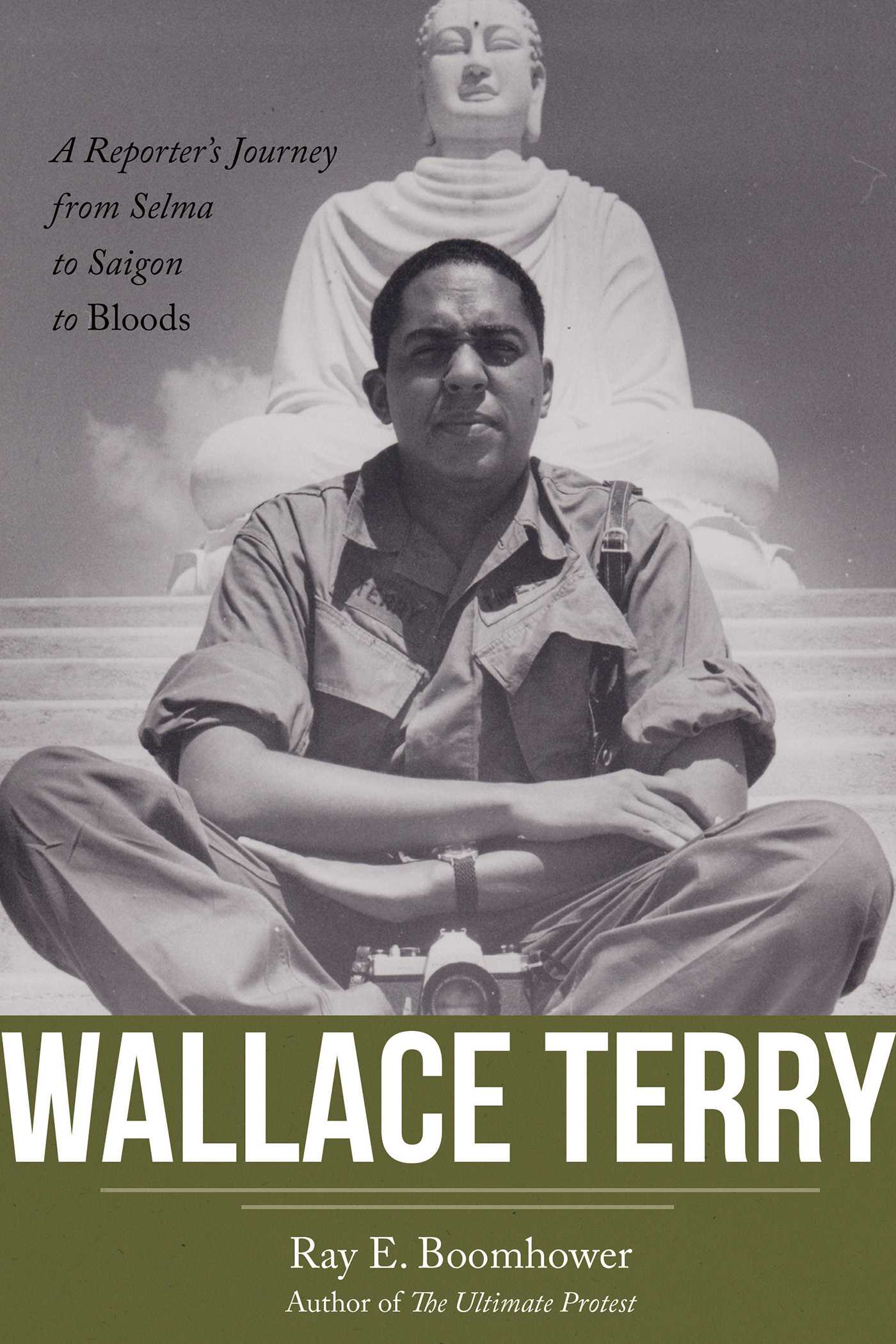
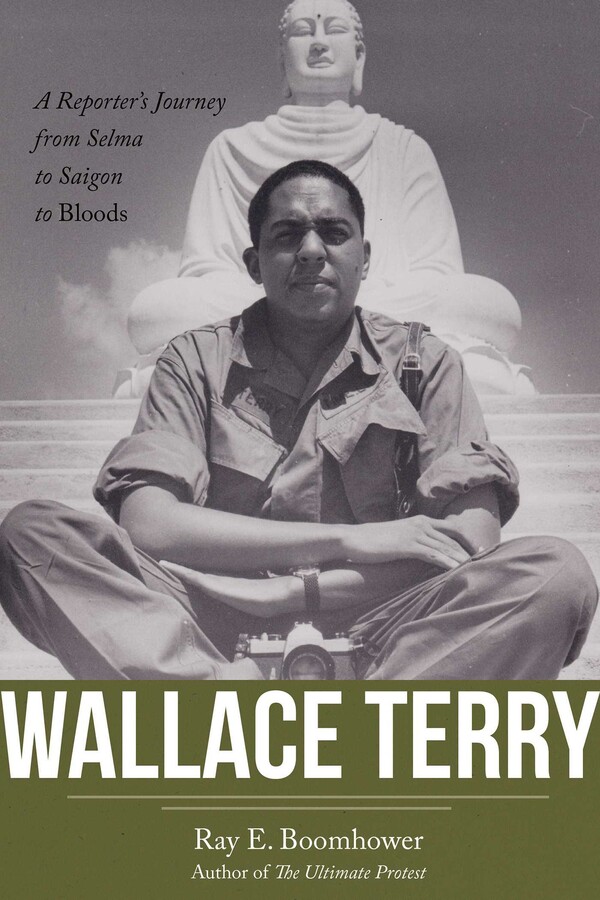
Award-winning biographer Ray Boomhower tells the story of a journalist who spent his life smashing barriers, from his childhood in Indiana and his Ivy League education at Brown to his reporting on the Civil Rights Movement in the Deep South in the 1960s and, finally, covering what he described as “the biggest story in the world” of his time, the Vietnam War.
Pioneering Black journalist Wallace Terry risked his life on the battlefield writing for Time magazine during the Vietnam War. While in Vietnam, he captured the voices and experiences of Black soldiers and used the insights he gained to produce Bloods: An Oral History of the Vietnam War by Black Veterans. The book remains a classic reflection of a war that fractured US society and cost the lives of nearly fifty-eight thousand Americans.
Before risking his life on the front lines, Terry became deeply involved in reporting about the Civil Rights Movement of the 1960s in the United States. “It was a story that I passionately cared for because it was going to affect me, my family, my children, and generations of Black people to come,” said Terry. Working for the Washington Post, he wrote the first newspaper series about the Nation of Islam, during which he interacted with Malcolm X, who sheltered him from harm when his stories upset some members of the movement. He also grew close to those who sacrificed their lives in the struggle for equality, including Medgar Evers and Martin Luther King Jr., who became godfather to Terry’s eldest son. Making civil rights his focus gave him the opportunity to report on such seminal events as the Birmingham campaign, the March on Washington, and the Selma to Montgomery marches.
During his two years covering the Vietnam War, Terry traveled overseas to conduct numerous interviews with Black fighting men—soldiers, sailors, airmen, and Marines—that he later used as the basis for Bloods. He sought with his work to topple the conviction that “white soldiers are invincible and black soldiers are invisible.” Terry faced numerous challenges, including rejections from publishers who believed the public did not want to read about Black veterans from the conflict. Finally published in 1984, Bloods became a bestseller and remains a landmark work of military and oral history.
Boomhower has written the first-ever biography of one of the first Black national correspondents to be hired in the overwhelmingly white mainstream media, a reporter whose name belongs with the greats in American journalism. Wallace Terry lived a life filled with danger and betrayal, scoops and cover-ups, while immersing himself in events that changed the course of US history.
Pioneering Black journalist Wallace Terry risked his life on the battlefield writing for Time magazine during the Vietnam War. While in Vietnam, he captured the voices and experiences of Black soldiers and used the insights he gained to produce Bloods: An Oral History of the Vietnam War by Black Veterans. The book remains a classic reflection of a war that fractured US society and cost the lives of nearly fifty-eight thousand Americans.
Before risking his life on the front lines, Terry became deeply involved in reporting about the Civil Rights Movement of the 1960s in the United States. “It was a story that I passionately cared for because it was going to affect me, my family, my children, and generations of Black people to come,” said Terry. Working for the Washington Post, he wrote the first newspaper series about the Nation of Islam, during which he interacted with Malcolm X, who sheltered him from harm when his stories upset some members of the movement. He also grew close to those who sacrificed their lives in the struggle for equality, including Medgar Evers and Martin Luther King Jr., who became godfather to Terry’s eldest son. Making civil rights his focus gave him the opportunity to report on such seminal events as the Birmingham campaign, the March on Washington, and the Selma to Montgomery marches.
During his two years covering the Vietnam War, Terry traveled overseas to conduct numerous interviews with Black fighting men—soldiers, sailors, airmen, and Marines—that he later used as the basis for Bloods. He sought with his work to topple the conviction that “white soldiers are invincible and black soldiers are invisible.” Terry faced numerous challenges, including rejections from publishers who believed the public did not want to read about Black veterans from the conflict. Finally published in 1984, Bloods became a bestseller and remains a landmark work of military and oral history.
Boomhower has written the first-ever biography of one of the first Black national correspondents to be hired in the overwhelmingly white mainstream media, a reporter whose name belongs with the greats in American journalism. Wallace Terry lived a life filled with danger and betrayal, scoops and cover-ups, while immersing himself in events that changed the course of US history.
Excerpt
Outgoing
Washington, DC, May 1967
It had been two years since the US Marines stormed ashore at Da Nang, South Vietnam, marking the first major deployment of American combat forces in the conflict in Southeast Asia. The war was “consuming the White House the way civil rights once did,” noted Wallace H. Terry, the first Black correspondent working for Time, the nation’s leading newsweekly.
Terry had an idea. Why not, he asked Richard M. Clurman, the magazine’s chief of correspondents, send a reporter to survey the contributions made by Black soldiers putting their lives on the line fighting the Communists? “I do not have in my mind going myself,” Terry recalled. “This could be dangerous.” Who would take care of his wife, Janice, and their three children if he never returned?
Clurman did the unexpected and asked Terry to tackle the assignment. Because it would be for only a brief time, Terry agreed to go. After all, he reasoned, one month did not appear to be “enough time to get killed.”
Despite his initial bravado, Wally Terry could not help but think about the worst that could happen to him in Vietnam. He sat down at a typewriter and produced a heartfelt goodbye letter for Janice. It read:
If anything happens to me, and I do not come back to you, know always that I love you more than life. Take good care of our babies, Little Wally, Lisa Victoria and David Christopher (I love to hear the ring of their names), for they are me and they are you. Give them what money cannot buy, and that is the love which we have shared and always will together. Let their lives grow straight just as our love did. And let them remember that their father is but one small part of the world which their mother gave them. For more of what life has given to me has been their mother. . . . My much better self. I love you to distraction. I always have, my darling, and I always will. Life and death are thus as one. A kiss for wife and babies from papa san.
Terry returned home safe and sound. During his time in Vietnam, he proved to his superiors at the magazine that he would not flinch at witnessing the horrors of war. When Clurman needed a correspondent he could count on when an opening occurred in Time’s Saigon bureau, he again turned to Terry, who accepted the assignment. News about the Vietnam War, Terry noted, had become “the only story to drive civil rights from the front pages.”
This time, however, he did not travel alone. Janice and their three children lived in Singapore while he worked in Saigon and saw them when he could. Janice also visited her husband from time to time. At the hotel in Singapore, its manager had handed Terry a letter he had been holding for him. Reading it, Terry learned that the Black officer who had served as his guide on his last trip to Vietnam had been killed in action; he had only forty-eight days left on his tour of duty.
Terry had discovered a valuable lesson about the deadly reality of war: Anything could happen to anybody at any time. “In Vietnam, you could walk around the corner in the street and get killed. The war was, really, in effect, everywhere,” he said.
Incoming
Embassy Hotel, Saigon, South Vietnam, 1968
It had been an exhausting and traumatic day for Time correspondent Wallace Terry. Trying to get some rest in his hotel room, he was startled upright in his bed, gasping for air. He finally managed to get to sleep but bolted awake, his body wracked with chest pains. Too frightened to let himself fall back to sleep, his first thought was to seek help from John Cantwell, his Time colleague, whose room was on the floor above. Terry, however, realized that Cantwell was not there. He was in Hong Kong visiting his wife and children.
Another name popped up in Terry’s mind: Smitty, who was also staying at the hotel. If anyone could help, he could. The three-hundred-pound wheeler-dealer former army medic had left military service but stayed in Vietnam to provide his expertise to the US Agency for International Development.
“He’d know if I were having a heart attack, I thought, with some confidence,” Terry remembered.
After banging on Smitty’s door, a voice thundered at him: “Goddam Wally. What the hell you want at this hour?”
Terry tried to explain.
“What you eat today?” Smitty asked.
“Not much of anything,” Terry responded.
“Hmm. Well, what were you doin’? Where’d they send ya’?”
Terry told Smitty about flying four missions with the Vietnamese air force, including streaking at treetop level to strike enemy positions, narrowly avoiding midair collisions because the pilots insisted on flying at the same altitude, and getting lost over the Mekong Delta with no view of the ground below.
Smitty laughed. He informed the reporter there was nothing to worry about. The explanation was simple.
“Oh, man, you just scared.”
Washington, DC, May 1967
It had been two years since the US Marines stormed ashore at Da Nang, South Vietnam, marking the first major deployment of American combat forces in the conflict in Southeast Asia. The war was “consuming the White House the way civil rights once did,” noted Wallace H. Terry, the first Black correspondent working for Time, the nation’s leading newsweekly.
Terry had an idea. Why not, he asked Richard M. Clurman, the magazine’s chief of correspondents, send a reporter to survey the contributions made by Black soldiers putting their lives on the line fighting the Communists? “I do not have in my mind going myself,” Terry recalled. “This could be dangerous.” Who would take care of his wife, Janice, and their three children if he never returned?
Clurman did the unexpected and asked Terry to tackle the assignment. Because it would be for only a brief time, Terry agreed to go. After all, he reasoned, one month did not appear to be “enough time to get killed.”
Despite his initial bravado, Wally Terry could not help but think about the worst that could happen to him in Vietnam. He sat down at a typewriter and produced a heartfelt goodbye letter for Janice. It read:
If anything happens to me, and I do not come back to you, know always that I love you more than life. Take good care of our babies, Little Wally, Lisa Victoria and David Christopher (I love to hear the ring of their names), for they are me and they are you. Give them what money cannot buy, and that is the love which we have shared and always will together. Let their lives grow straight just as our love did. And let them remember that their father is but one small part of the world which their mother gave them. For more of what life has given to me has been their mother. . . . My much better self. I love you to distraction. I always have, my darling, and I always will. Life and death are thus as one. A kiss for wife and babies from papa san.
Terry returned home safe and sound. During his time in Vietnam, he proved to his superiors at the magazine that he would not flinch at witnessing the horrors of war. When Clurman needed a correspondent he could count on when an opening occurred in Time’s Saigon bureau, he again turned to Terry, who accepted the assignment. News about the Vietnam War, Terry noted, had become “the only story to drive civil rights from the front pages.”
This time, however, he did not travel alone. Janice and their three children lived in Singapore while he worked in Saigon and saw them when he could. Janice also visited her husband from time to time. At the hotel in Singapore, its manager had handed Terry a letter he had been holding for him. Reading it, Terry learned that the Black officer who had served as his guide on his last trip to Vietnam had been killed in action; he had only forty-eight days left on his tour of duty.
Terry had discovered a valuable lesson about the deadly reality of war: Anything could happen to anybody at any time. “In Vietnam, you could walk around the corner in the street and get killed. The war was, really, in effect, everywhere,” he said.
Incoming
Embassy Hotel, Saigon, South Vietnam, 1968
It had been an exhausting and traumatic day for Time correspondent Wallace Terry. Trying to get some rest in his hotel room, he was startled upright in his bed, gasping for air. He finally managed to get to sleep but bolted awake, his body wracked with chest pains. Too frightened to let himself fall back to sleep, his first thought was to seek help from John Cantwell, his Time colleague, whose room was on the floor above. Terry, however, realized that Cantwell was not there. He was in Hong Kong visiting his wife and children.
Another name popped up in Terry’s mind: Smitty, who was also staying at the hotel. If anyone could help, he could. The three-hundred-pound wheeler-dealer former army medic had left military service but stayed in Vietnam to provide his expertise to the US Agency for International Development.
“He’d know if I were having a heart attack, I thought, with some confidence,” Terry remembered.
After banging on Smitty’s door, a voice thundered at him: “Goddam Wally. What the hell you want at this hour?”
Terry tried to explain.
“What you eat today?” Smitty asked.
“Not much of anything,” Terry responded.
“Hmm. Well, what were you doin’? Where’d they send ya’?”
Terry told Smitty about flying four missions with the Vietnamese air force, including streaking at treetop level to strike enemy positions, narrowly avoiding midair collisions because the pilots insisted on flying at the same altitude, and getting lost over the Mekong Delta with no view of the ground below.
Smitty laughed. He informed the reporter there was nothing to worry about. The explanation was simple.
“Oh, man, you just scared.”
Product Details
- Publisher: High Road Books (November 10, 2026)
- Length: 272 pages
- ISBN13: 9780826370150
Browse Related Books
Raves and Reviews
“Ray Boomhower has captured all the gritty detail of a pioneering Black journalist’s professional and personal life in his Wallace Terry: A Reporter’s Journey from Selma to Saigon to Bloods. The reader is witness to Terry’s years-long strength and determination to tell the story of the Black soldier in the Vietnam War in his seminal best seller Bloods: An Oral History of the Vietnam War by Black Veterans. The obstacles were many. Terry overcame them all!”
– Leon Dash, Pulitzer Prize–winning author of Rosa Lee: A Mother and Her Family in Urban America
“An outstanding biography of a trailblazing African American journalist whose coverage of the civil rights struggle and Vietnam War in the 1960s endures as a landmark in courage. Wallace Terry is a masterful work of scholarship, exquisitely researched and intricately detailed.”
– Neil Henry, author of Pearl’s Secret: A Black Man’s Search for His White Family
“Highly recommended. Ray Boomhower’s biography of the journalist Wally Terry is a thorough and enlightening look at Terry’s remarkable life and career, including his courageous and pioneering work as a war correspondent in the Vietnam War.”
– Marc Leepson, author of The Unlikely War Hero: A Vietnam War POW’s Story of Courage and Resilience in the Hanoi Hilton
“This riveting and well-written biography sheds penetrating light on the career of a pioneering Black journalist and war correspondent. Wallace Terry's reportage from the battlefields of Vietnam—and Dixie before that—remains illuminating and remarkably educational.”
– Gerald Horne, author of The Rise and Fall of the Associated Negro Press: Claude Barnett’s Pan-African News and the Jim Crow Paradox
Resources and Downloads
High Resolution Images
-
Book Cover Image (jpg): Wallace Terry
Hardcover 9780826370150