Plus get our latest book recommendations, author news, and competitions right to your inbox.
Published by Park Street Press
Distributed by Simon & Schuster
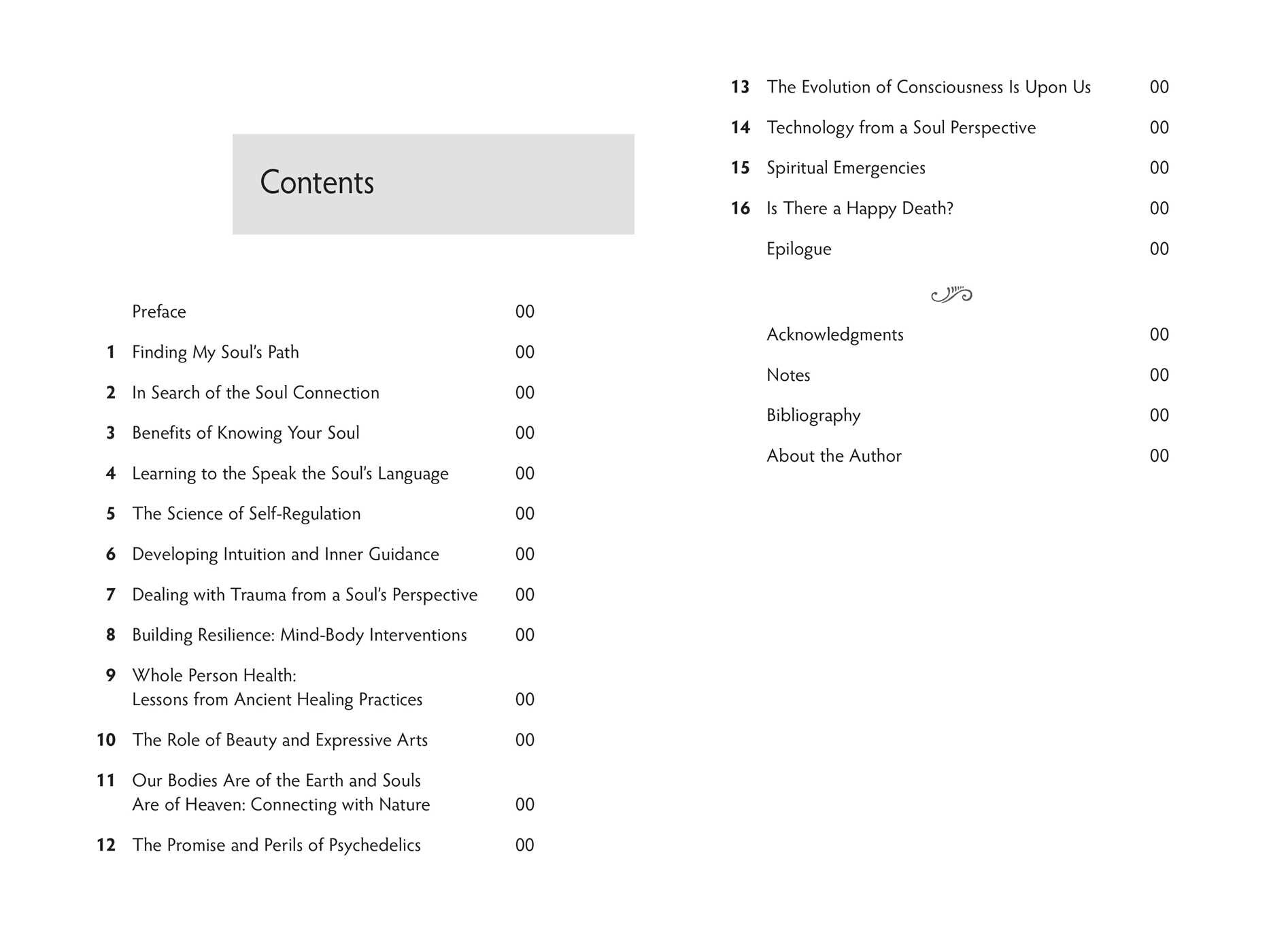
Table of Contents
About The Book
“A comprehensive guide to healing that incorporates psychological, physical, and spiritual practices for overall wellness.”—Kirkus Reviews
• Explains how to connect with your Soul for inner guidance, peace, and an opportunity to reach your highest potential
• Offers integrative psychological, spiritual, and mind-body practices to help you reduce stress and your reactive behaviors, and reconnect with your higher consciousness
• Reveals your Soul’s purpose through proven methodology and shows how to cultivate gratitude, compassion, and happiness by living an authentic life
Exploring the intersection of spirituality and neuroscience—utilizing both to optimize spiritual and mental health—psychiatrist and neuroscientist Helen Lavretsky shows that the evolution of the Soul is the purpose of life. Drawing on the latest research and examples from her clinical practice, Lavretsky helps you know and embody your Soul—a union that provides inner guidance, peace, balance, happiness, and an opportunity to reach your highest potential.
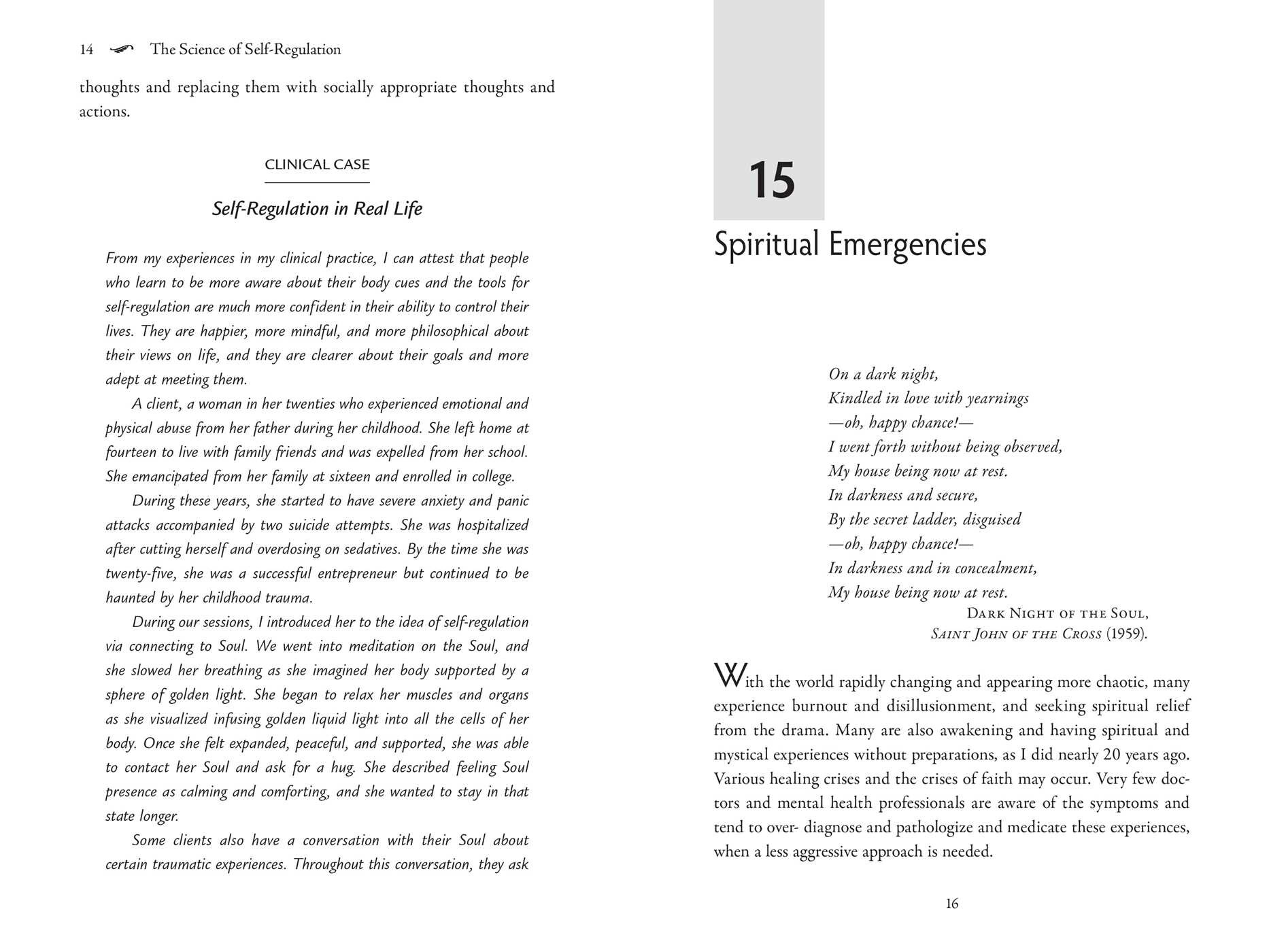
Lavretsky aims to put the psyche (soul) back into psychology using a proven methodology to enable you to control reactive behavior and reconnect with higher consciousness. She gives guidance on how to navigate challenges and spiritual emergencies, such as the Dark Night of the Soul, with enhanced intuitive abilities and clarity.
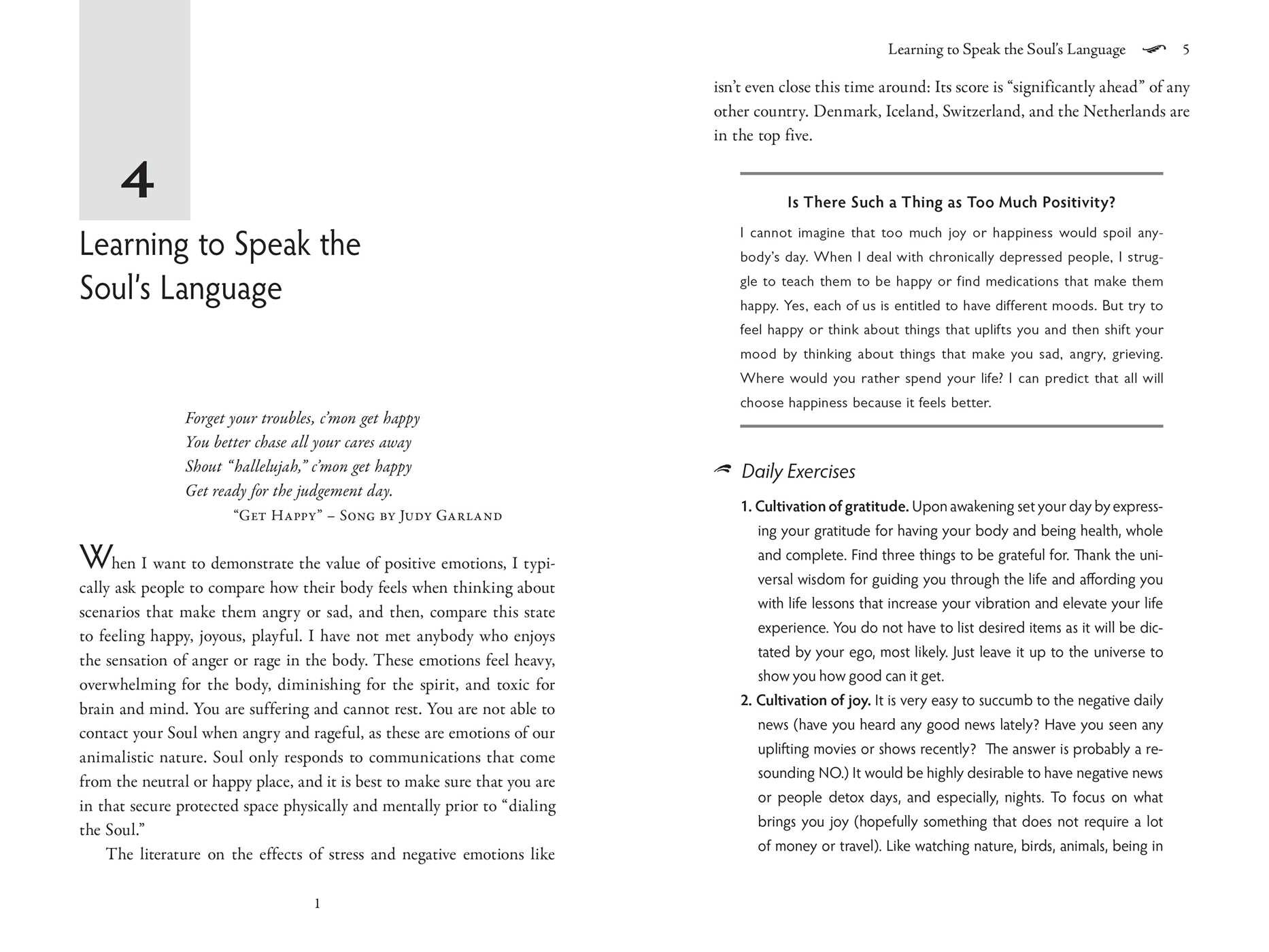
With clinical examples and more than 20 practical exercises, Lavretsky shows how you can incorporate the neuroscience of spiritual awakening to transform negative thoughts and feelings into a sense of excitement and curiosity. This will increase your ability to reduce stress, regulate negative emotions, improve your brain health, and cultivate gratitude, compassion, and a consistent sense of serenity and well-being by living a truly authentic life.
• Explains how to connect with your Soul for inner guidance, peace, and an opportunity to reach your highest potential
• Offers integrative psychological, spiritual, and mind-body practices to help you reduce stress and your reactive behaviors, and reconnect with your higher consciousness
• Reveals your Soul’s purpose through proven methodology and shows how to cultivate gratitude, compassion, and happiness by living an authentic life
Exploring the intersection of spirituality and neuroscience—utilizing both to optimize spiritual and mental health—psychiatrist and neuroscientist Helen Lavretsky shows that the evolution of the Soul is the purpose of life. Drawing on the latest research and examples from her clinical practice, Lavretsky helps you know and embody your Soul—a union that provides inner guidance, peace, balance, happiness, and an opportunity to reach your highest potential.
Lavretsky aims to put the psyche (soul) back into psychology using a proven methodology to enable you to control reactive behavior and reconnect with higher consciousness. She gives guidance on how to navigate challenges and spiritual emergencies, such as the Dark Night of the Soul, with enhanced intuitive abilities and clarity.
With clinical examples and more than 20 practical exercises, Lavretsky shows how you can incorporate the neuroscience of spiritual awakening to transform negative thoughts and feelings into a sense of excitement and curiosity. This will increase your ability to reduce stress, regulate negative emotions, improve your brain health, and cultivate gratitude, compassion, and a consistent sense of serenity and well-being by living a truly authentic life.
Excerpt
1
Finding My Soul’s Path
No one saves us but ourselves.
No one can, and no one may.
We ourselves must walk the path:
Buddhas only point the way.
PAUL CARUS, KARMA: A STORY OF
BUDDHIST ETHICS (1894)
Do you know why you were born? Do you know the purpose of your life, or what you are destined to experience?
Like most of us, throughout my childhood and into my adult years, I believed we were born to attain an education, work, get married, and have children. Then, at the end, we would die and be buried in a lush, green cemetery, finally finding peace. So that’s what I set out to do.
I was determined to make the best of my life, dying peacefully after having achieved success and a satisfying, accomplished, purposeful life. These ideas and my attitude toward life were instilled in me by my upbringing and my Russian Jewish heritage. Throughout life, expectations were placed on me by my parents and my contemporaries, and I did my best to meet them.
I grew up in Moscow surrounded by intellectuals and scientists, often feeling that I was born to become a psychiatrist. My mother was and still is a practicing psychiatrist, and my father was a neurologist. I had easy access to their large collection of books, which introduced me to the workings of the mind and the brain. Before the age of ten, I read books about cerebral palsy and Down syndrome. A natural empath and sensitive, I was strangely attracted to the pictures of young children who were clearly suffering. Why did they suffer? I wanted to help them.
My first “patient” was a friend of mine—a three-year-old boy who was completely mute. Though he struggled to communicate, I intuitively understood his wishes and translated them to the adults. I went on to receive years of medical training, but at its essence, what I do for my patients today is not much different than what I did for that boy. I understand their suffering, and I help them communicate with the world, thereby helping to alleviate that suffering.
Growing up, though spirituality was never part of our life, I was aware on some level of my intuitive and psychic abilities. I was a sensitive child who often experienced premonitions that came true, and from the time I could speak, I found myself intuitively “reading” people (understanding their desires and motivations). My mother was disturbed by my abilities and consulted with psychologists.
During my adolescence, I began painting, using art as a means of expressing my deeper psychic visions, which terrified her. My paintings underscored my mother’s view of me as being at least “strange.”
At age sixteen, I created a painting that so resonated with me throughout my life that I went on to reproduce it in multiple media, including oils, photography, silk screening, and collage. The image, which still guides me today, was of my head and neck sticking out of the water, facing infinity, the stars, and the moons of the universe. This was one of three paintings that I carried with me across the borders when we immigrated to the United States. It was not until my early fifties that I fully realized what that painting represents, which is my inner knowledge of my deep connection to the Universe, Divine Mother, and Source, where I am but a droplet in her ocean of consciousness.
It was rather remarkable that this knowledge came through me into that first painting. This would be one of several that guided my life and helped in manifesting places and events, which is a function of transcendent art practice (I had no such concept in mind at that time). After all, I had been raised in a culture of militaristic atheism. To some extent, Christian Russian Orthodox churches were available to us, despite the suppression of communism. But somehow, in my adolescence I came across books that exposed me to Judaism, Hinduism, Buddhism, and other world religions. I was drawn to them—not one, but broadly. I even tried yoga and shifted my diet accordingly by going on prolonged fasts. This was based on information I found in borrowed books, as no yoga classes were available in Russia at that time.
During high school, I started to develop an interest in psychiatric research. My very first summer job at fifteen was in the pharmacy of a psychiatric hospital. I watched with curiosity as patients with severe mental illness wandered through the beautiful garden of the hospital. As part of a vocational rehabilitation program, they worked in the greenhouses, growing fresh fruits and vegetables. At the time, such programs were the mainstay of psychiatry in Russia.
For a high school science project, I performed hypnosis on a classmate, again following the procedure outlined in a book. I used a pendulum and classified their responses. Later, after reading an old French phrenology book, I examined classmates’ skulls using the topography to make phrenological descriptions of their personalities. This gained me some popularity among my peers and was an early sign of what would blossom into a deep interest and exploration of mind-body interventions and brain biomarkers.
In 1979, I entered the Moscow Medical Institute, where I immediately joined a research interest group in the psychiatry department. I performed my first official research study, which was on psychiatric manifestations in women with gynecological cancers. I got an opportunity to practice research methods, and I learned about the difficult feelings women deal with when facing terminal cancer, along with my own reaction to their suffering and the dying process. I was fascinated by the combination of intellectual inquiry and emotional discovery, and I spent every weekend working on the project. The study resulted in my first published paper, which won an award at a medical student research conference in Moscow.
After graduating, I started a psychiatry residency at the Moscow Center of Mental Health of the Academy of Medical Sciences, where I became interested in geriatric psychiatry and the brain-behavior relationship in patients with melancholic depression and post-stroke depression. After I completed my residency, I relocated to the United States. I was part of the third wave of Russian Jewish immigration just before the fall of the Soviet Union. There was a sense of impending doom in the air, and it was a relief to escape it. It was a drastic move, yet at the time, the full drama was lost on me.
I had to repeat my training in psychiatry, and after passing board examinations, I was matched to a residency in psychiatry at the University of California, Los Angeles, Veterans Administration campus. From there on, I completed a fellowship in geriatric psychiatry and the National VA fellowship in neuroscience, after which I joined and remained on the faculty at UCLA for the next twenty-seven years.
At UCLA, I did notice that, for the first time in my life, I felt at home. The melting pot that is Los Angeles was more accepting of me than Russia ever was. What made me stand out in Russia helped me fit in in California, where diversity was the norm. I loved living in LA and felt like I belonged there. My bond with the university was strengthened when I explored the marvelous biomedical library and discovered a book in its stacks by my great-uncle, Alexander Shmaryan.
Shortly after World War II, he had served as the chief psychiatrist of Russia and was responsible for the development of neuropsychiatry, based on his study of war-related brain injuries. His book was forbidden in Russia. It had been removed from libraries as part of Stalin’s purges of Jewish physicians and scientists. These bans also included luminaries such as Alexander Luria, a prominent neuropsychologist who contributed greatly to our knowledge of the relationship between brain and behavior.
In addition to the library, I spent a lot of time in the nearby botanical gardens preparing for my medical boards, feeling supported by the old trees. Once I passed the exams, I was matched to the UCLA–San Fernando Valley residency program in psychiatry, a program that was receptive to my research interests. I liked the people there, and the hospital with its vast green gardens reminded me of early experiences working in the pharmacy of the psychiatric facility in Russia. Given my fluency with models of socialized medicine, I found it easy to adjust to the medical operations at the facility, which were similar. And it was in this facility that I met a patient who would make a lifetime impression on me.
Finding My Soul’s Path
No one saves us but ourselves.
No one can, and no one may.
We ourselves must walk the path:
Buddhas only point the way.
PAUL CARUS, KARMA: A STORY OF
BUDDHIST ETHICS (1894)
Do you know why you were born? Do you know the purpose of your life, or what you are destined to experience?
Like most of us, throughout my childhood and into my adult years, I believed we were born to attain an education, work, get married, and have children. Then, at the end, we would die and be buried in a lush, green cemetery, finally finding peace. So that’s what I set out to do.
I was determined to make the best of my life, dying peacefully after having achieved success and a satisfying, accomplished, purposeful life. These ideas and my attitude toward life were instilled in me by my upbringing and my Russian Jewish heritage. Throughout life, expectations were placed on me by my parents and my contemporaries, and I did my best to meet them.
I grew up in Moscow surrounded by intellectuals and scientists, often feeling that I was born to become a psychiatrist. My mother was and still is a practicing psychiatrist, and my father was a neurologist. I had easy access to their large collection of books, which introduced me to the workings of the mind and the brain. Before the age of ten, I read books about cerebral palsy and Down syndrome. A natural empath and sensitive, I was strangely attracted to the pictures of young children who were clearly suffering. Why did they suffer? I wanted to help them.
My first “patient” was a friend of mine—a three-year-old boy who was completely mute. Though he struggled to communicate, I intuitively understood his wishes and translated them to the adults. I went on to receive years of medical training, but at its essence, what I do for my patients today is not much different than what I did for that boy. I understand their suffering, and I help them communicate with the world, thereby helping to alleviate that suffering.
Growing up, though spirituality was never part of our life, I was aware on some level of my intuitive and psychic abilities. I was a sensitive child who often experienced premonitions that came true, and from the time I could speak, I found myself intuitively “reading” people (understanding their desires and motivations). My mother was disturbed by my abilities and consulted with psychologists.
During my adolescence, I began painting, using art as a means of expressing my deeper psychic visions, which terrified her. My paintings underscored my mother’s view of me as being at least “strange.”
At age sixteen, I created a painting that so resonated with me throughout my life that I went on to reproduce it in multiple media, including oils, photography, silk screening, and collage. The image, which still guides me today, was of my head and neck sticking out of the water, facing infinity, the stars, and the moons of the universe. This was one of three paintings that I carried with me across the borders when we immigrated to the United States. It was not until my early fifties that I fully realized what that painting represents, which is my inner knowledge of my deep connection to the Universe, Divine Mother, and Source, where I am but a droplet in her ocean of consciousness.
It was rather remarkable that this knowledge came through me into that first painting. This would be one of several that guided my life and helped in manifesting places and events, which is a function of transcendent art practice (I had no such concept in mind at that time). After all, I had been raised in a culture of militaristic atheism. To some extent, Christian Russian Orthodox churches were available to us, despite the suppression of communism. But somehow, in my adolescence I came across books that exposed me to Judaism, Hinduism, Buddhism, and other world religions. I was drawn to them—not one, but broadly. I even tried yoga and shifted my diet accordingly by going on prolonged fasts. This was based on information I found in borrowed books, as no yoga classes were available in Russia at that time.
During high school, I started to develop an interest in psychiatric research. My very first summer job at fifteen was in the pharmacy of a psychiatric hospital. I watched with curiosity as patients with severe mental illness wandered through the beautiful garden of the hospital. As part of a vocational rehabilitation program, they worked in the greenhouses, growing fresh fruits and vegetables. At the time, such programs were the mainstay of psychiatry in Russia.
For a high school science project, I performed hypnosis on a classmate, again following the procedure outlined in a book. I used a pendulum and classified their responses. Later, after reading an old French phrenology book, I examined classmates’ skulls using the topography to make phrenological descriptions of their personalities. This gained me some popularity among my peers and was an early sign of what would blossom into a deep interest and exploration of mind-body interventions and brain biomarkers.
In 1979, I entered the Moscow Medical Institute, where I immediately joined a research interest group in the psychiatry department. I performed my first official research study, which was on psychiatric manifestations in women with gynecological cancers. I got an opportunity to practice research methods, and I learned about the difficult feelings women deal with when facing terminal cancer, along with my own reaction to their suffering and the dying process. I was fascinated by the combination of intellectual inquiry and emotional discovery, and I spent every weekend working on the project. The study resulted in my first published paper, which won an award at a medical student research conference in Moscow.
After graduating, I started a psychiatry residency at the Moscow Center of Mental Health of the Academy of Medical Sciences, where I became interested in geriatric psychiatry and the brain-behavior relationship in patients with melancholic depression and post-stroke depression. After I completed my residency, I relocated to the United States. I was part of the third wave of Russian Jewish immigration just before the fall of the Soviet Union. There was a sense of impending doom in the air, and it was a relief to escape it. It was a drastic move, yet at the time, the full drama was lost on me.
I had to repeat my training in psychiatry, and after passing board examinations, I was matched to a residency in psychiatry at the University of California, Los Angeles, Veterans Administration campus. From there on, I completed a fellowship in geriatric psychiatry and the National VA fellowship in neuroscience, after which I joined and remained on the faculty at UCLA for the next twenty-seven years.
At UCLA, I did notice that, for the first time in my life, I felt at home. The melting pot that is Los Angeles was more accepting of me than Russia ever was. What made me stand out in Russia helped me fit in in California, where diversity was the norm. I loved living in LA and felt like I belonged there. My bond with the university was strengthened when I explored the marvelous biomedical library and discovered a book in its stacks by my great-uncle, Alexander Shmaryan.
Shortly after World War II, he had served as the chief psychiatrist of Russia and was responsible for the development of neuropsychiatry, based on his study of war-related brain injuries. His book was forbidden in Russia. It had been removed from libraries as part of Stalin’s purges of Jewish physicians and scientists. These bans also included luminaries such as Alexander Luria, a prominent neuropsychologist who contributed greatly to our knowledge of the relationship between brain and behavior.
In addition to the library, I spent a lot of time in the nearby botanical gardens preparing for my medical boards, feeling supported by the old trees. Once I passed the exams, I was matched to the UCLA–San Fernando Valley residency program in psychiatry, a program that was receptive to my research interests. I liked the people there, and the hospital with its vast green gardens reminded me of early experiences working in the pharmacy of the psychiatric facility in Russia. Given my fluency with models of socialized medicine, I found it easy to adjust to the medical operations at the facility, which were similar. And it was in this facility that I met a patient who would make a lifetime impression on me.
Product Details
- Publisher: Park Street Press (July 7, 2026)
- Length: 328 pages
- ISBN13: 9798888503140
Browse Related Books
Raves and Reviews
“Living from the Soul offers an opportunity to deepen your connection to your soul. Dr. Lavretsky shares a vast range of healing and spiritual practices from her award- winning research of wisdom traditions.”
– Elissa Epel, PhD, professor of psychiatry, University of California, San Francisco, and author of Th
“A luminous weaving of neuroscience and spirit, this book offers not just a theory, but a living pathway home. By grounding profound spiritual insights in rigorous scientific observation—from MRI studies to epigenetic changes—it masterfully rebuilds the bridge between the soul and modern psychiatry. Lavretsky’s unique perspective, born from both clinical expertise and deep personal awakening, reframes trauma, resilience, and healing as sacred journeys of consciousness. This is more than a guide; it is an invitation to remember who you are, to reclaim your voice as a creator, and to live from that place of sovereign inner light.”
– Anna Yusim, MD, author of Fulfilled, clinical assistant professor at Yale University, and cofounder
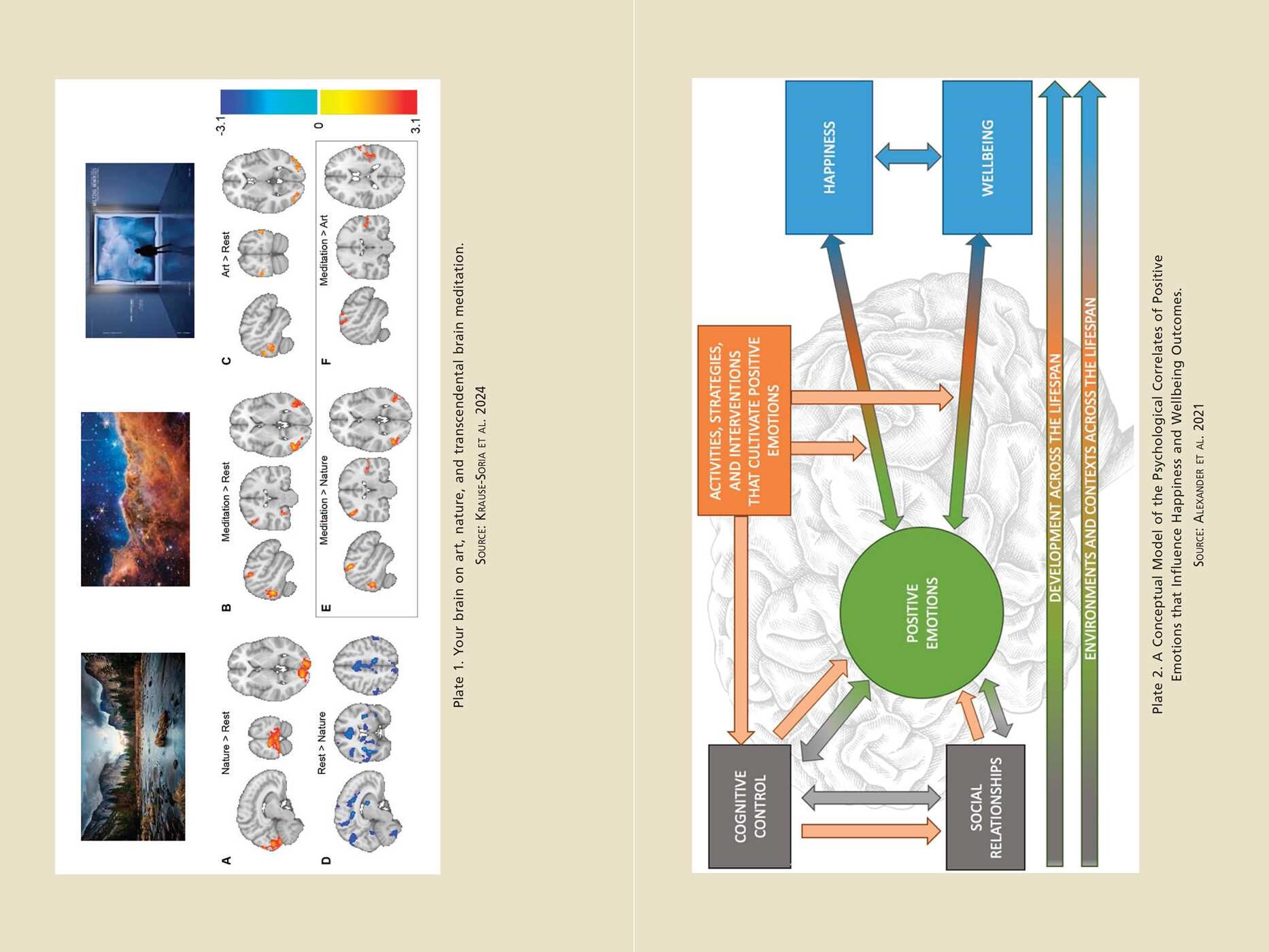
“Lavretsky understands deeply what makes life ultimately worth living: spirituality born of purpose and meaning, of love for others and for oneself. Living from the Soul provides a remarkable journey into the convergence of contemporary brain science and well-being. The book is rich with easy-to-understand observational and experimental data, portrayed with illustrations from the Lavretsky laboratory. This is a book of great importance, addressing the need to harmonize and to re-integrate humanism within medical science. As such, it is a gift to anyone seeking to awaken fully to the beauty and joy of being alive in the midst of manifold uncertainties.”
– Charles F. Reynolds III, MD, emeritus professor of psychiatry and UPMC endowed professor in geriatri
“This book masterfully weaves neuroscience, psychiatry, and spirituality into a hopeful vision of advanced human development. Grounded in research yet rich with wisdom, it shows how awakening—or living from the soul—affects the brain, mental health, and spiritual purpose. It is both intellectually illuminating and deeply nourishing for anyone longing to integrate science, spirit, and lived experience.”
– Connie Zweig, PhD, author of The Inner Work of Age and Meeting the Shadow on the Spiritual Path
“Drawing on years of clinical and scientific scholarship, Helen Lavretsky demonstrates that spiritual awakening—often viewed as ineffable—can be understood as a measurable, transformative brain-based process. With clarity, compassion, and rigor, she offers an integrative framework linking inner experience to healing, meaning, and resilience. This book will resonate with clinicians, researchers, and all seekers interested in an evidence-informed understanding of human flourishing.”
– Dilip V. Jeste, MD, director of the Global Research Network on Social Determinants of Mental Health
“We live in a world dominated by materialistic life goals, which are well known to be ultimately unsatisfying with respect to achieving a gratifying life purpose and meaning as well as quality of life. This book—written by a leading neuroscientist, mind-body medicine researcher, UCLA professor, and psychiatrist—shares suggested practices, discusses practical issues and challenges, and also provides a wealth of comprehensive and detailed information on the psychophysiology, neuroscience, psychology, and philosophy of spirituality and transcendental states. Lavretsky explains the importance of all these for achieving true happiness and a fulfilling and rewarding life.”
– Sat Bir S. Khalsa, PhD, corresponding member of the faculty of medicine at Harvard Medical School an
Resources and Downloads
High Resolution Images
-
Book Cover Image (jpg): Living from the Soul
eBook 9798888503140