

Plus get our latest book recommendations, author news, and competitions right to your inbox.
Table of Contents
About The Book
INSTANT #1 BESTSELLER
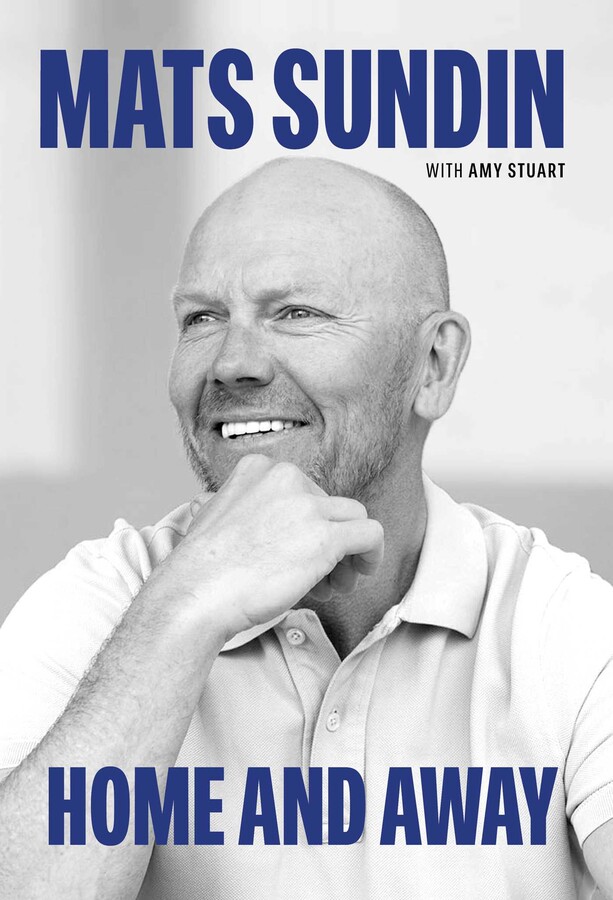
In one of the last great remaining untold stories in all of sports, the Hall of Fame Toronto Maple Leafs captain Mats Sundin shares for the first time an unfiltered look at playing hockey in Sweden and across North America as part of the sport’s most fabled franchises.
Growing up in Sollentuna, Sweden, on the outskirts of Stockholm, Mats Sundin skated on the lake downhill from his house, a house his father had built with his own hands, on land his mother insisted on buying for their future. In the darkness of the Scandinavian winter Sundin would chase after his older brother on that lake for countless hours. Summers spent in nature with his grandparents instilled a lifelong love for the outdoors. Playing hockey in their driveway, the three Sundin brothers imagined scenes of suiting up for Sweden’s national team and scoring a game winning goal against their favoured rival, the Soviet Union. It wasn’t until his late teens that he caught the eyes of scouts and coaches from the other side of the Atlantic. At the 1989 NHL draft, eighteen-year-old Sundin was as surprised as anyone when he was selected first overall by the Quebec Nordiques.
After a few years as a Nordique, Sundin was traded to the Toronto Maple Leafs in exchange for the highly popular Leaf captain, Wendel Clark. In his early years in Toronto, he felt both at home and from away, working extra hard to gain acceptance in the world’s toughest hockey market. Even once he was named captain, Sundin didn’t deviate from his quiet nature but instead lead by example, never asking anyone to work harder than he did. Over thirteen seasons with the team, he would learn just how fiery the cauldron of Leafs Nation could be.
In Home and Away, Mats Sundin writes openly for the first time about what it was like for him to uproot his life in Sweden to embark on a long hockey career an ocean away. Home and Away is an elegiac, heartfelt, and honest story of a man who followed his passions, cherished his family, faced heavy scrutiny, and ultimately earned his way into both the hearts of fans and the hockey record books. His journey transcends the rink and shows what it means to be a quiet and unpretentious Swedish kid who went on to become one of the most accomplished players in the history of the game.
In one of the last great remaining untold stories in all of sports, the Hall of Fame Toronto Maple Leafs captain Mats Sundin shares for the first time an unfiltered look at playing hockey in Sweden and across North America as part of the sport’s most fabled franchises.
Growing up in Sollentuna, Sweden, on the outskirts of Stockholm, Mats Sundin skated on the lake downhill from his house, a house his father had built with his own hands, on land his mother insisted on buying for their future. In the darkness of the Scandinavian winter Sundin would chase after his older brother on that lake for countless hours. Summers spent in nature with his grandparents instilled a lifelong love for the outdoors. Playing hockey in their driveway, the three Sundin brothers imagined scenes of suiting up for Sweden’s national team and scoring a game winning goal against their favoured rival, the Soviet Union. It wasn’t until his late teens that he caught the eyes of scouts and coaches from the other side of the Atlantic. At the 1989 NHL draft, eighteen-year-old Sundin was as surprised as anyone when he was selected first overall by the Quebec Nordiques.
After a few years as a Nordique, Sundin was traded to the Toronto Maple Leafs in exchange for the highly popular Leaf captain, Wendel Clark. In his early years in Toronto, he felt both at home and from away, working extra hard to gain acceptance in the world’s toughest hockey market. Even once he was named captain, Sundin didn’t deviate from his quiet nature but instead lead by example, never asking anyone to work harder than he did. Over thirteen seasons with the team, he would learn just how fiery the cauldron of Leafs Nation could be.
In Home and Away, Mats Sundin writes openly for the first time about what it was like for him to uproot his life in Sweden to embark on a long hockey career an ocean away. Home and Away is an elegiac, heartfelt, and honest story of a man who followed his passions, cherished his family, faced heavy scrutiny, and ultimately earned his way into both the hearts of fans and the hockey record books. His journey transcends the rink and shows what it means to be a quiet and unpretentious Swedish kid who went on to become one of the most accomplished players in the history of the game.
Excerpt
Chapter 1: February 2009 1 February 2009
I jolt up in bed. I’m sweating. I can’t catch my breath.
Relax, Mats, I think.
I was standing in an empty dressing room with Brian Papineau, the Toronto Maple Leafs’ equipment manager. Something was wrong. My skate laces kept breaking. Sweat dripped into my eyes. The damn laces wouldn’t thread. This would never happen in real life—Brian is way too good at his job. I couldn’t even tie my skates. We could hear the roar of the home crowd down the hall. We were losing the game and the clock was ticking. My teammates needed me, but I wasn’t there. I was stuck in the dressing room.
For a team captain, there’s no worse feeling. It’s my perfect nightmare.
I turn on the bedside lamp. I need to get my bearings. Everything feels out of order on this cold February morning. I’m in Toronto, the city where I’ve lived since 1994. But I’m in a hotel room. My house on Dunvegan Road, three miles away, sits dark and empty.
For fourteen years, hundreds and hundreds of times, I’ve woken up in Toronto, ready to start my game-day routine. Breakfast. A short team skate down at our home rink, the Air Canada Centre. Home. Lunch. Nap. Pregame meal. Suit on. Pregame snack, coffee, water. Back to the rink.
Today is game day, so I’ll still follow that same routine. But there’s one big difference: tonight, I’ll suit up for the Vancouver Canucks. My last game as a Maple Leaf was nearly a year ago. It’s February 21, 2009. Toronto is enemy territory now.
The Canucks arrived last night after a sound 5–2 win over the Ottawa Senators. I’d forgotten just how freezing Toronto could be in February—the sort of cold that seeps into your bones, a damp cold that reminds me of Stockholm. A few guys on the plane asked me how I was feeling. They understood the significance; even the media in Ottawa were asking me about returning to Toronto. I played thirteen seasons as a Toronto Maple Leaf, eleven as the team’s captain. I’m the franchise’s all-time leader in points and goals. In the fall of 2008, after a complicated year, I signed to play the final stretch of my hockey career as a Vancouver Canuck.
Last night, the drive to the hotel felt surreal. I’ve taken my normal route eastward from Pearson Airport to my house on Dunvegan hundreds of times. When the team bus turned south instead, my muscle memory tweaked. Traffic was light. The CN Tower stood lit up among the skyscrapers.
My teammates gave me space on the bus. I checked into my room and fell asleep easily enough.
This morning, I don’t turn on the news. I stick to my routine. My breakfast consists of oatmeal and berries, toast, boiled eggs, fruit, coffee and juice—the same thing I’ve eaten on more than 1,300 game days. Routine has always been crucial to me. I need it. It calms me and gets me ready to compete. At home or away, I keep things familiar and predictable. The rhythms of preparation help temper the knot in my stomach. Around 11 a.m., I get dressed and descend to the lobby to board the Vancouver team bus. We are headed to the Air Canada Centre for our morning skate. I sit next to a younger teammate.
“Nervous?” he asks.
“A little.”
“Everyone will be happy to see you,” he says. “They love you here.”
“I’m not so sure about that,” I say.
“It’ll be fine.”
This teammate has played professional hockey for a few years, but never in Toronto. I’ve tried many times to explain the Toronto Maple Leafs to outsiders, whether it’s fellow pros from other teams or friends and family back in Sweden. The Maple Leafs’ history is long and storied and complicated. Dozens of reporters make a living writing solely about the Leafs, covering everything from trade speculation, to performance, to where players ate dinner last night, to what brand of hockey sticks we use. Every game is sold out. Despite decades without a Stanley Cup, fans are die-hard and loyal. Even when we’d play games in cities like Tampa or Los Angeles, half the fans in the building would be sporting our hometown blue and white. Leafs Nation is bigger than hockey. It’s its own universe.
Pulling on the Leafs jersey for every game was a great honor. This city became my home. Many of my friends live here. My fiancée, Josephine, moved here from Sweden to live with me. Strangers would call out, “Hey Mats!” on the street. As I said, Leafs Nation is hard to explain if you haven’t lived it. So, on the bus, I just nod to my well-meaning teammate.
“Yeah,” I say. “It’ll be fine.”
We pull into the arena. The knot builds in my stomach as I get off the bus. The first person I see is Bill, the longtime usher. He offers me a warm and familiar smile.
“Welcome back, Mats.”
I shake his hand, relieved. I’m intercepted by other staff, all offering the same warmth. Everyone seems as happy to see me as I am to see them. I feel my shoulders relax.
The visitors’ dressing room feels like a hidden domain I always knew existed but never crossed into. It’s nice, but not nearly as nice as the home dressing room on the other side of the rink.
I’m not here to get lost in memories. I’m here to play hockey. I lock into the rhythms of getting ready for the morning skate. Equipment on, sticks taped, skates tied. As soon as I step on the ice, I feel loose. This is familiar.
It’s game day, so the skate is short. The coaches give us a few notes and send us on our way. Once showered and dressed, I wander down the hall to find Brian “Pappy” Papineau and the rest of the training and equipment crew. The walls in the equipment area are covered with the signatures of Leafs old and new. This staff was always such an important part of our team. Pappy is glad to see me. We catch up for a few minutes.
“Everyone’s excited,” Brian says.
I laugh. “Maybe not everyone.”
After so many years in Toronto, I know better than to subject myself to the media stories about my return. I’d done a few interviews over the past few days and the questions were all variations on a theme: Do you think you’ll be welcomed back? What if the fans boo you?
Toronto fans may well boo me tonight. Eight months ago, I left Toronto after we failed to make the playoffs for the third straight year. There’d been a lot of tension after I refused a trade in mid-season and then departed at its end. When I signed with the Canucks three months ago, the Toronto media demolished me.
So, no, I wasn’t about to read what they were writing about me today.
“We miss you, Mats,” Brian says.
I feel a lump in my throat.
“I miss you guys, too.”
“Good luck tonight.”
I nod. Brian steps aside to let me pass.
Back at the hotel, I settle in, calmer. I always read a book and eat ice cream before my pregame nap. Today, my book is P. O. Enquist’s autobiography, A Different Life. Like my mother, Enquist is from Sweden’s far north. His memoir is about difficult life choices and regret, which is on point today.
I’m relaxed. I pull the hotel curtains shut, set my alarm and fall asleep.
When I wake up ninety minutes later, the knot in my stomach has tightened. I dress in my suit and tie and head downstairs to eat a snack before gathering at the bus.
By the time we pull into the rink’s underground parking lot, I’m in game mode. Focused, but anxious. I can remember being this nervous in 2006 before the Olympic gold medal game in Turin, or in 1992 at the World Championships, or right before a big playoff matchup. But these nerves are out of whack for a regular-season game in the middle of February.
In the dressing room, I grab a coffee and my sticks. Cutting and taping my sticks is a big part of my pregame routine. Sometimes I do two, sometimes three. Fifteen years ago, I didn’t need to warm up my body. But these days, at thirty-eight, I take twenty minutes on the stationary bike and a long sequence of stretches to ramp me up to game-ready.
The clock ticks. I put on my gear, listen to the coaches and chatter with my teammates. As we stand to walk down the tunnel for our warm-up skate, the knot in my stomach twists. When I step onto the ice, there’s a small roar. It’s thirty minutes to puck drop, and the stands are still half-empty. But the fans who are here aren’t booing at all. They might even be cheering.
As I take my first lap, I hear someone call my name.
“Mats! We love you!”
I look up at a small boy standing by the glass. He’s holding a sign with a blue maple leaf and three words in bubble writing: Thank you, Mats.
I catch myself smiling as I skate by.
Back in the dressing room, coach Alain Vigneault announces the starting lineup. My teammates are ready. It’s been a good week for the Canucks; we’re on a three-game winning streak. A trainer props the dressing room door open, and I can hear the fans getting louder. Everyone in the room is locked in. At the signal, the guys stand up. Some yell, while others stay quiet. We grab our sticks and vacate the room. I step onto the ice and remind myself to veer to the visitors’ side.
The crowd cheers again. I see many of my former teammates on the home side. Guys I played with for years are my opponents now.
We stand for the pregame ceremony. I close my eyes when the anthem starts. O Canada, our home and native land. I hum along. I’ve long known the words by heart. Almost twenty years ago, when I moved to Canada as a nineteen-year-old kid, it never occurred to me that this country would slowly become my home, so much so that I’d sometimes feel more Canadian than Swedish.
The fans sing and sway. When the time comes to retire from hockey, this is what I’ll miss the most—standing on the blue line, anticipating the next sixty minutes. In this sport, every single game plays out like an unscripted drama. All the fans and media can try to predict the result, but the beauty of hockey lies in the fact that anything can happen. Any guy on the ice could turn out to be the night’s hero. The goose bumps start on my scalp and work downward to my feet.
The lights come on and the puck drops. These days, it takes a few shifts for my legs to adjust to the intensity. It’s always been hard for me to anticipate whether I’ll have a good showing on a given night. I might arrive at the rink nervous or tired and then play in top form, or arrive feeling great and then flub a play. The game is so fast and physical, with a small margin between a great play and a fatal mistake.
Coach Vigneault is giving me more ice time tonight than in our previous game. I pride myself on my focus, so it’s disorienting to feel distracted. I hear a few distant boos when I first touch the puck. My arms and legs go numb for an instant. It feels like a parallel universe to be on the ice at the Air Canada Centre and trying to score against the Leafs.
There’s a commercial break six or so minutes into the first period. While I’m on the Canucks bench, a highlight reel of my career as a Leaf starts to play on the scoreboard. The fans stand and cheer. The guys on the Leaf bench tap their sticks. Even the Leafs management staff, way up in their private box in the rafters, rise to their feet. I’m overwhelmed. I look down, but can’t hold back the tears. When the ovation shows no signs of quieting, Coach Vigneault taps me on the back to send me on the ice.
I skate to the end zone and line up to take the face-off against Matt Stajan, my friend and teammate of five years. I want the play to resume, but Stajan and the linesman back away as the ovation continues.
“Let’s go,” I say finally.
Stajan says something to me, but I can’t hear him.
The puck drops and he wins the draw. My blood starts pumping again.
The game ends in a 2–2 tie. After five minutes of overtime, the tie stands. This means we go to a shootout.
“Sundin!” Alain yells. “You’re shooter three.”
The knot in my stomach is back. Toronto shoots first and misses. Pavol Demitra scores for the Canucks. The Leafs miss again. The Canucks miss. Finally, the Leafs score and the stage is set.
The shootout is tied. I’m up. Shooter three. If I score, we win the game.
The announcer calls my name. I circle back to the Canucks net. Our goalie, Roberto Luongo, gives me a nod. The crowd is deafening. As soon as I take my first stride toward the puck, the noise disappears, like a mute button has been pressed. My nerves disappear, too. I skate to pick up the puck, like I’ve done thousands of times. At center ice, I collect it almost casually. I might as well be back in Sweden, playing street hockey with my brothers in our driveway. In our imaginary scenarios, we were always the heroes. We were always moving in on a goalie, about to score the winner in a tie game. There was always a roaring crowd and a game on the line. I feel at home now. This is my building, these are my fans.
I gain speed. I know my move before I even cross the blue line. My dad’s voice is in my head: Fake the goalie. Just a little deke to throw him off. Leafs goalie Vesa Toskala was my teammate last season. He knows my tactics, but bites anyway when I fake a shot. I cut past him and switch to my backhand, pausing for a split second before firing the puck over his pads and under the crossbar.
The red light flips on. Goal.
The mute button releases, and the noise of the crowd hits me. The Leafs have just lost, but their home fans are cheering wildly. I’m happy, relieved. My Canucks teammates join me on the ice. When I glance at the Leafs bench, I catch Brian Papineau smiling. What a strange night.
“You won’t forget that one,” a teammate says as we skate off.
Only after I’m back in the dressing room does it sink in just how much I’d dreaded this day. Despite my stoicism with the media and my teammates, I’ve been worried. I’m relieved it’s over.
A reporter, Elliotte Friedman, finds me in the hallway and pulls me aside for an interview.
“Did you go to the Leafs dressing room?” he jokes.
I laugh and choke out a no.
“What a storybook ending for you.”
As I try to respond, there’s a crack in my voice. I’m dripping with sweat. I admit to him that the past week had been challenging because of how much Toronto means to me. Over the years, I’ve become good at controlling my emotions during interviews. But at this moment, I’m barely hanging on.
The truth is, I spent fifteen years imagining my last game in Toronto, ever since I was traded here in 1994. In my dream version, my final game was playing for the Stanley Cup. We win the Cup in front of a home crowd, and an entire city unleashes before our eyes. Thousands and thousands of fans flood onto Yonge Street, honking horns, their flags hanging out every window. A sea of kids laugh and cheer with the blue maple leaf painted on their faces. The parade fills the streets for miles. Even in the dream version, I feel a remarkable sense of pride in giving millions of loyal Toronto fans what they’ve wanted for so long.
I did score the winning goal tonight, but it wasn’t the dream ending. There’s no Cup to hoist, only a flight to catch. As I head to the showers, I wonder if this will be the last game I’ll ever play at the Air Canada Centre. After eighteen years, my time as an NHL player is nearing its end. Lately, I’ve caught myself looking back on it all. The long journey from my childhood in Sweden, to an NHL career full of ups and downs, to this unforgettable February game in Toronto. How would I begin to untangle it? I’d have to start at the beginning.
I jolt up in bed. I’m sweating. I can’t catch my breath.
Relax, Mats, I think.
I was standing in an empty dressing room with Brian Papineau, the Toronto Maple Leafs’ equipment manager. Something was wrong. My skate laces kept breaking. Sweat dripped into my eyes. The damn laces wouldn’t thread. This would never happen in real life—Brian is way too good at his job. I couldn’t even tie my skates. We could hear the roar of the home crowd down the hall. We were losing the game and the clock was ticking. My teammates needed me, but I wasn’t there. I was stuck in the dressing room.
For a team captain, there’s no worse feeling. It’s my perfect nightmare.
I turn on the bedside lamp. I need to get my bearings. Everything feels out of order on this cold February morning. I’m in Toronto, the city where I’ve lived since 1994. But I’m in a hotel room. My house on Dunvegan Road, three miles away, sits dark and empty.
For fourteen years, hundreds and hundreds of times, I’ve woken up in Toronto, ready to start my game-day routine. Breakfast. A short team skate down at our home rink, the Air Canada Centre. Home. Lunch. Nap. Pregame meal. Suit on. Pregame snack, coffee, water. Back to the rink.
Today is game day, so I’ll still follow that same routine. But there’s one big difference: tonight, I’ll suit up for the Vancouver Canucks. My last game as a Maple Leaf was nearly a year ago. It’s February 21, 2009. Toronto is enemy territory now.
The Canucks arrived last night after a sound 5–2 win over the Ottawa Senators. I’d forgotten just how freezing Toronto could be in February—the sort of cold that seeps into your bones, a damp cold that reminds me of Stockholm. A few guys on the plane asked me how I was feeling. They understood the significance; even the media in Ottawa were asking me about returning to Toronto. I played thirteen seasons as a Toronto Maple Leaf, eleven as the team’s captain. I’m the franchise’s all-time leader in points and goals. In the fall of 2008, after a complicated year, I signed to play the final stretch of my hockey career as a Vancouver Canuck.
Last night, the drive to the hotel felt surreal. I’ve taken my normal route eastward from Pearson Airport to my house on Dunvegan hundreds of times. When the team bus turned south instead, my muscle memory tweaked. Traffic was light. The CN Tower stood lit up among the skyscrapers.
My teammates gave me space on the bus. I checked into my room and fell asleep easily enough.
This morning, I don’t turn on the news. I stick to my routine. My breakfast consists of oatmeal and berries, toast, boiled eggs, fruit, coffee and juice—the same thing I’ve eaten on more than 1,300 game days. Routine has always been crucial to me. I need it. It calms me and gets me ready to compete. At home or away, I keep things familiar and predictable. The rhythms of preparation help temper the knot in my stomach. Around 11 a.m., I get dressed and descend to the lobby to board the Vancouver team bus. We are headed to the Air Canada Centre for our morning skate. I sit next to a younger teammate.
“Nervous?” he asks.
“A little.”
“Everyone will be happy to see you,” he says. “They love you here.”
“I’m not so sure about that,” I say.
“It’ll be fine.”
This teammate has played professional hockey for a few years, but never in Toronto. I’ve tried many times to explain the Toronto Maple Leafs to outsiders, whether it’s fellow pros from other teams or friends and family back in Sweden. The Maple Leafs’ history is long and storied and complicated. Dozens of reporters make a living writing solely about the Leafs, covering everything from trade speculation, to performance, to where players ate dinner last night, to what brand of hockey sticks we use. Every game is sold out. Despite decades without a Stanley Cup, fans are die-hard and loyal. Even when we’d play games in cities like Tampa or Los Angeles, half the fans in the building would be sporting our hometown blue and white. Leafs Nation is bigger than hockey. It’s its own universe.
Pulling on the Leafs jersey for every game was a great honor. This city became my home. Many of my friends live here. My fiancée, Josephine, moved here from Sweden to live with me. Strangers would call out, “Hey Mats!” on the street. As I said, Leafs Nation is hard to explain if you haven’t lived it. So, on the bus, I just nod to my well-meaning teammate.
“Yeah,” I say. “It’ll be fine.”
We pull into the arena. The knot builds in my stomach as I get off the bus. The first person I see is Bill, the longtime usher. He offers me a warm and familiar smile.
“Welcome back, Mats.”
I shake his hand, relieved. I’m intercepted by other staff, all offering the same warmth. Everyone seems as happy to see me as I am to see them. I feel my shoulders relax.
The visitors’ dressing room feels like a hidden domain I always knew existed but never crossed into. It’s nice, but not nearly as nice as the home dressing room on the other side of the rink.
I’m not here to get lost in memories. I’m here to play hockey. I lock into the rhythms of getting ready for the morning skate. Equipment on, sticks taped, skates tied. As soon as I step on the ice, I feel loose. This is familiar.
It’s game day, so the skate is short. The coaches give us a few notes and send us on our way. Once showered and dressed, I wander down the hall to find Brian “Pappy” Papineau and the rest of the training and equipment crew. The walls in the equipment area are covered with the signatures of Leafs old and new. This staff was always such an important part of our team. Pappy is glad to see me. We catch up for a few minutes.
“Everyone’s excited,” Brian says.
I laugh. “Maybe not everyone.”
After so many years in Toronto, I know better than to subject myself to the media stories about my return. I’d done a few interviews over the past few days and the questions were all variations on a theme: Do you think you’ll be welcomed back? What if the fans boo you?
Toronto fans may well boo me tonight. Eight months ago, I left Toronto after we failed to make the playoffs for the third straight year. There’d been a lot of tension after I refused a trade in mid-season and then departed at its end. When I signed with the Canucks three months ago, the Toronto media demolished me.
So, no, I wasn’t about to read what they were writing about me today.
“We miss you, Mats,” Brian says.
I feel a lump in my throat.
“I miss you guys, too.”
“Good luck tonight.”
I nod. Brian steps aside to let me pass.
Back at the hotel, I settle in, calmer. I always read a book and eat ice cream before my pregame nap. Today, my book is P. O. Enquist’s autobiography, A Different Life. Like my mother, Enquist is from Sweden’s far north. His memoir is about difficult life choices and regret, which is on point today.
I’m relaxed. I pull the hotel curtains shut, set my alarm and fall asleep.
When I wake up ninety minutes later, the knot in my stomach has tightened. I dress in my suit and tie and head downstairs to eat a snack before gathering at the bus.
By the time we pull into the rink’s underground parking lot, I’m in game mode. Focused, but anxious. I can remember being this nervous in 2006 before the Olympic gold medal game in Turin, or in 1992 at the World Championships, or right before a big playoff matchup. But these nerves are out of whack for a regular-season game in the middle of February.
In the dressing room, I grab a coffee and my sticks. Cutting and taping my sticks is a big part of my pregame routine. Sometimes I do two, sometimes three. Fifteen years ago, I didn’t need to warm up my body. But these days, at thirty-eight, I take twenty minutes on the stationary bike and a long sequence of stretches to ramp me up to game-ready.
The clock ticks. I put on my gear, listen to the coaches and chatter with my teammates. As we stand to walk down the tunnel for our warm-up skate, the knot in my stomach twists. When I step onto the ice, there’s a small roar. It’s thirty minutes to puck drop, and the stands are still half-empty. But the fans who are here aren’t booing at all. They might even be cheering.
As I take my first lap, I hear someone call my name.
“Mats! We love you!”
I look up at a small boy standing by the glass. He’s holding a sign with a blue maple leaf and three words in bubble writing: Thank you, Mats.
I catch myself smiling as I skate by.
Back in the dressing room, coach Alain Vigneault announces the starting lineup. My teammates are ready. It’s been a good week for the Canucks; we’re on a three-game winning streak. A trainer props the dressing room door open, and I can hear the fans getting louder. Everyone in the room is locked in. At the signal, the guys stand up. Some yell, while others stay quiet. We grab our sticks and vacate the room. I step onto the ice and remind myself to veer to the visitors’ side.
The crowd cheers again. I see many of my former teammates on the home side. Guys I played with for years are my opponents now.
We stand for the pregame ceremony. I close my eyes when the anthem starts. O Canada, our home and native land. I hum along. I’ve long known the words by heart. Almost twenty years ago, when I moved to Canada as a nineteen-year-old kid, it never occurred to me that this country would slowly become my home, so much so that I’d sometimes feel more Canadian than Swedish.
The fans sing and sway. When the time comes to retire from hockey, this is what I’ll miss the most—standing on the blue line, anticipating the next sixty minutes. In this sport, every single game plays out like an unscripted drama. All the fans and media can try to predict the result, but the beauty of hockey lies in the fact that anything can happen. Any guy on the ice could turn out to be the night’s hero. The goose bumps start on my scalp and work downward to my feet.
The lights come on and the puck drops. These days, it takes a few shifts for my legs to adjust to the intensity. It’s always been hard for me to anticipate whether I’ll have a good showing on a given night. I might arrive at the rink nervous or tired and then play in top form, or arrive feeling great and then flub a play. The game is so fast and physical, with a small margin between a great play and a fatal mistake.
Coach Vigneault is giving me more ice time tonight than in our previous game. I pride myself on my focus, so it’s disorienting to feel distracted. I hear a few distant boos when I first touch the puck. My arms and legs go numb for an instant. It feels like a parallel universe to be on the ice at the Air Canada Centre and trying to score against the Leafs.
There’s a commercial break six or so minutes into the first period. While I’m on the Canucks bench, a highlight reel of my career as a Leaf starts to play on the scoreboard. The fans stand and cheer. The guys on the Leaf bench tap their sticks. Even the Leafs management staff, way up in their private box in the rafters, rise to their feet. I’m overwhelmed. I look down, but can’t hold back the tears. When the ovation shows no signs of quieting, Coach Vigneault taps me on the back to send me on the ice.
I skate to the end zone and line up to take the face-off against Matt Stajan, my friend and teammate of five years. I want the play to resume, but Stajan and the linesman back away as the ovation continues.
“Let’s go,” I say finally.
Stajan says something to me, but I can’t hear him.
The puck drops and he wins the draw. My blood starts pumping again.
The game ends in a 2–2 tie. After five minutes of overtime, the tie stands. This means we go to a shootout.
“Sundin!” Alain yells. “You’re shooter three.”
The knot in my stomach is back. Toronto shoots first and misses. Pavol Demitra scores for the Canucks. The Leafs miss again. The Canucks miss. Finally, the Leafs score and the stage is set.
The shootout is tied. I’m up. Shooter three. If I score, we win the game.
The announcer calls my name. I circle back to the Canucks net. Our goalie, Roberto Luongo, gives me a nod. The crowd is deafening. As soon as I take my first stride toward the puck, the noise disappears, like a mute button has been pressed. My nerves disappear, too. I skate to pick up the puck, like I’ve done thousands of times. At center ice, I collect it almost casually. I might as well be back in Sweden, playing street hockey with my brothers in our driveway. In our imaginary scenarios, we were always the heroes. We were always moving in on a goalie, about to score the winner in a tie game. There was always a roaring crowd and a game on the line. I feel at home now. This is my building, these are my fans.
I gain speed. I know my move before I even cross the blue line. My dad’s voice is in my head: Fake the goalie. Just a little deke to throw him off. Leafs goalie Vesa Toskala was my teammate last season. He knows my tactics, but bites anyway when I fake a shot. I cut past him and switch to my backhand, pausing for a split second before firing the puck over his pads and under the crossbar.
The red light flips on. Goal.
The mute button releases, and the noise of the crowd hits me. The Leafs have just lost, but their home fans are cheering wildly. I’m happy, relieved. My Canucks teammates join me on the ice. When I glance at the Leafs bench, I catch Brian Papineau smiling. What a strange night.
“You won’t forget that one,” a teammate says as we skate off.
Only after I’m back in the dressing room does it sink in just how much I’d dreaded this day. Despite my stoicism with the media and my teammates, I’ve been worried. I’m relieved it’s over.
A reporter, Elliotte Friedman, finds me in the hallway and pulls me aside for an interview.
“Did you go to the Leafs dressing room?” he jokes.
I laugh and choke out a no.
“What a storybook ending for you.”
As I try to respond, there’s a crack in my voice. I’m dripping with sweat. I admit to him that the past week had been challenging because of how much Toronto means to me. Over the years, I’ve become good at controlling my emotions during interviews. But at this moment, I’m barely hanging on.
The truth is, I spent fifteen years imagining my last game in Toronto, ever since I was traded here in 1994. In my dream version, my final game was playing for the Stanley Cup. We win the Cup in front of a home crowd, and an entire city unleashes before our eyes. Thousands and thousands of fans flood onto Yonge Street, honking horns, their flags hanging out every window. A sea of kids laugh and cheer with the blue maple leaf painted on their faces. The parade fills the streets for miles. Even in the dream version, I feel a remarkable sense of pride in giving millions of loyal Toronto fans what they’ve wanted for so long.
I did score the winning goal tonight, but it wasn’t the dream ending. There’s no Cup to hoist, only a flight to catch. As I head to the showers, I wonder if this will be the last game I’ll ever play at the Air Canada Centre. After eighteen years, my time as an NHL player is nearing its end. Lately, I’ve caught myself looking back on it all. The long journey from my childhood in Sweden, to an NHL career full of ups and downs, to this unforgettable February game in Toronto. How would I begin to untangle it? I’d have to start at the beginning.
About The Author
© Simon and Schuster Canada
Mats Sundin is the longest-serving captain not born in North America in NHL history. He enjoyed a prolific eighteen-season NHL career as well as a superb international career playing for Sweden, his homeland. When he was selected by the Quebec Nordiques in the 1989 NHL Entry Draft, he became the first European-born player ever drafted first overall. The Nordiques traded him to the Toronto Maple Leafs, and the rest is hockey history. At the time of his retirement, Sundin stood as the Toronto Maple Leafs’ all-time franchise leader in goals and points. A quiet leader, the durable Sundin is regarded as one of the finest Swedes to have played in the National Hockey League, and one of the greatest Toronto Maple Leafs of all time. He lives in Sweden and visits Toronto often.
Product Details
- Publisher: Simon & Schuster (November 13, 2024)
- Length: 320 pages
- ISBN13: 9781668053539
Browse Related Books
Raves and Reviews
“Mats was a big, skilled center who was one of the best players of his era, a true Hall of Famer, but I’ll remember him as much for his class as for his talent on the ice. He was a consummate captain and leader. I’ll always remember lining up against him for the opening faceoff of my comeback game in Pittsburgh in 2000 – a special moment for me. It’s great that he’s chosen to tell his story.”
— MARIO LEMIEUX
“Mats is one of the best, most respected players and Captains to have ever played for the Toronto Maple Leafs. From the time I was fortunate enough to be drafted by the Leafs, he was talked about a lot and, given his Hall of Fame career and all he accomplished, is someone I admire.”
— AUSTON MATTHEWS
“Mats and I were close friends from day one and still are. Everyone knew I had his back on the ice. What people didn’t know was that Mats had my back off the ice, during a very difficult personal time. Mats is one of our giants of our game, like Mario Lemieux. Like Mario, Mats is also a man of few words, so it’s a treat to hear Mats tell his story after all these years.”
— TIE DOMI
“Mats is a Leafs legend, a hall of famer, and someone I look up to to this day.”
— CONNOR MCDAVID
“The no-brainer gift of the season. . . [for readers] with a passion for hockey”
— Global News
“Mats Sundin was a great leader and captain that led the way on the ice and brought the team together. Mats would play his best hockey in important and deciding games. He was an incredibly skilled player who could win games by himself.”
— NICKLAS LIDSTRÖM, Stanley Cup Champion, Member of the Hockey Hall of Fame
Resources and Downloads
High Resolution Images
-
Book Cover Image (jpg): Home and Away
Hardcover 9781668053539
-
Author Photo (jpg): Mats Sundin © Simon and Schuster Canada(0.1 MB)
Any use of an author photo must include its respective photo credit