
Plus get our latest book recommendations, author news, and competitions right to your inbox.
Table of Contents
About The Book
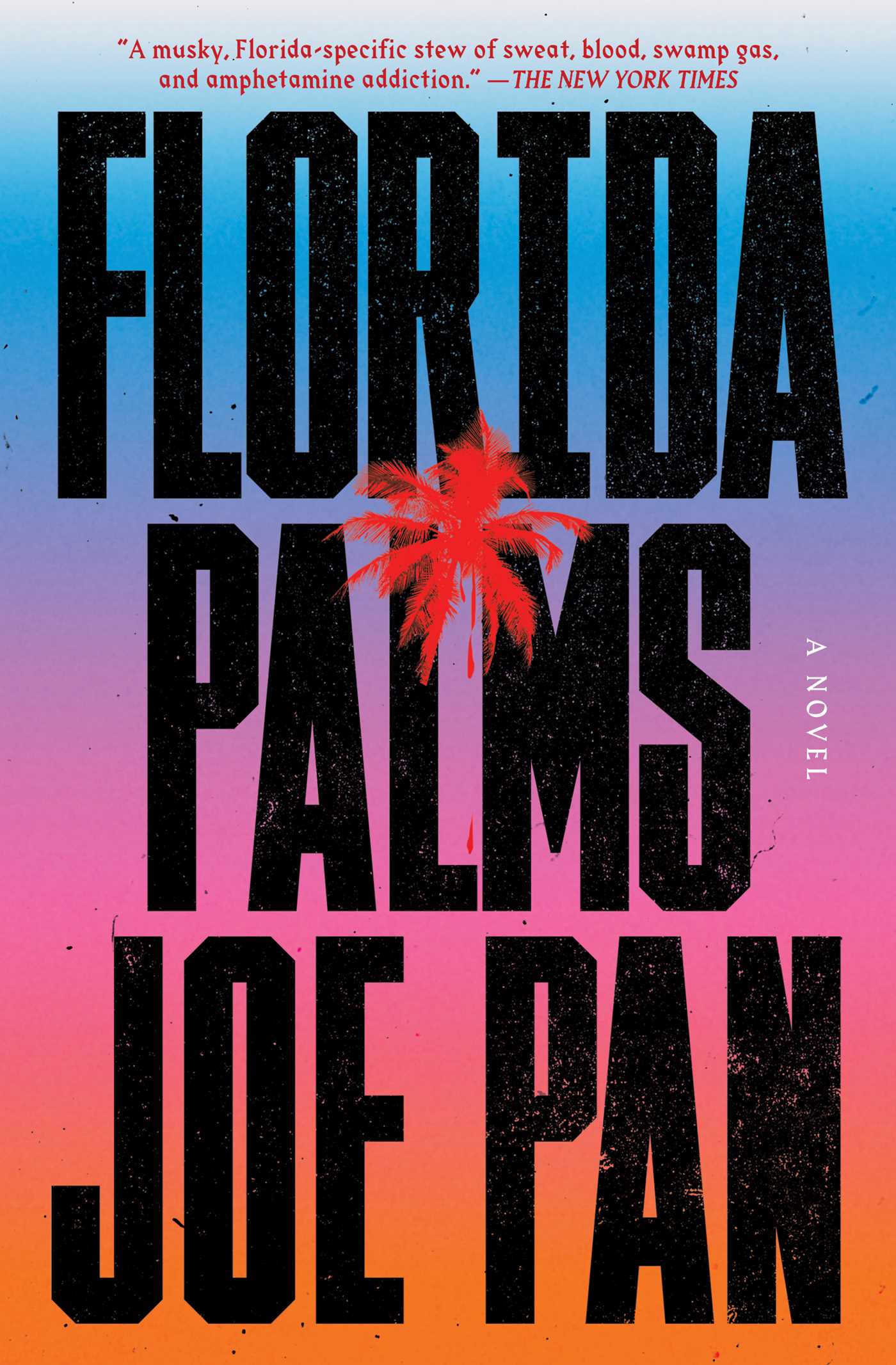
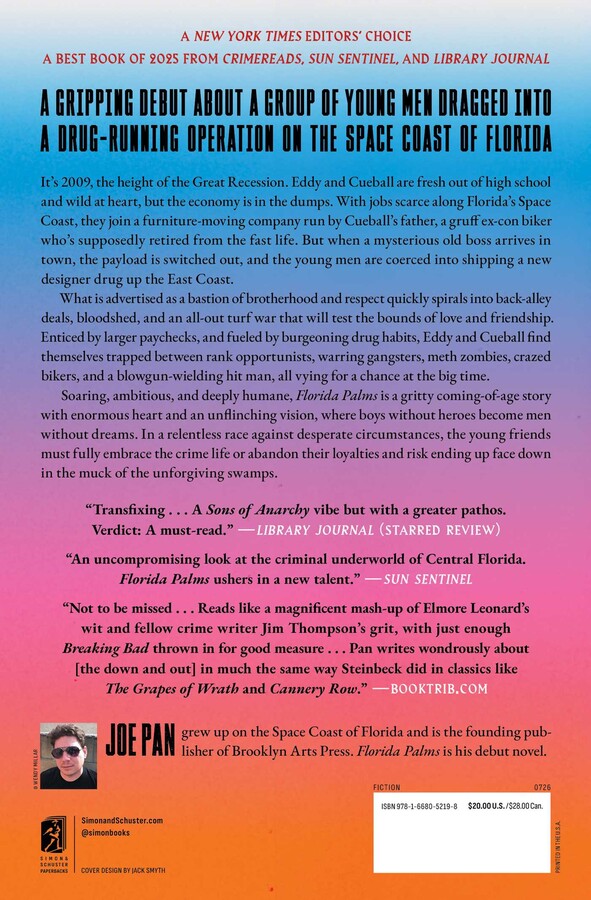
The Outsiders meet Sons of Anarchy in this gripping debut about a group of young men dragged into a drug-running operation on the Space Coast of Florida.
It’s 2009, the height of the Great Recession. Best friends Eddy, Cueball, and Jesse are fresh out of high school and wild at heart, but the economy is in the dumps. With jobs scarce along Florida’s Space Coast, they join a furniture-moving company run by Cueball’s father, a gruff ex-con biker who’s supposedly retired from the fast life. But when a mysterious old boss arrives in town, the payload is switched out, and the young men are coerced into shipping a new designer drug up the East Coast.
What is advertised as a bastion of brotherhood and respect quickly spirals into back-alley deals, bloodshed, and an all-out turf war that will test the bounds of love and friendship. Enticed by larger paychecks, and fueled by burgeoning drug habits, the young friends find themselves trapped between rank opportunists, warring gangsters, meth zombies, crazed bikers, and a blowgun-wielding hitman, all vying for a shot at the big time.
Soaring, ambitious, and deeply humane, Florida Palms is a gritty coming-of-age story with enormous heart and an unflinching vision of the violence and inequities facing forgotten communities. In a relentless race against desperate circumstances, the young friends must fully embrace the crime life or abandon their loyalties and risk ending up face down in the muck of the unforgiving swamps.
It’s 2009, the height of the Great Recession. Best friends Eddy, Cueball, and Jesse are fresh out of high school and wild at heart, but the economy is in the dumps. With jobs scarce along Florida’s Space Coast, they join a furniture-moving company run by Cueball’s father, a gruff ex-con biker who’s supposedly retired from the fast life. But when a mysterious old boss arrives in town, the payload is switched out, and the young men are coerced into shipping a new designer drug up the East Coast.
What is advertised as a bastion of brotherhood and respect quickly spirals into back-alley deals, bloodshed, and an all-out turf war that will test the bounds of love and friendship. Enticed by larger paychecks, and fueled by burgeoning drug habits, the young friends find themselves trapped between rank opportunists, warring gangsters, meth zombies, crazed bikers, and a blowgun-wielding hitman, all vying for a shot at the big time.
Soaring, ambitious, and deeply humane, Florida Palms is a gritty coming-of-age story with enormous heart and an unflinching vision of the violence and inequities facing forgotten communities. In a relentless race against desperate circumstances, the young friends must fully embrace the crime life or abandon their loyalties and risk ending up face down in the muck of the unforgiving swamps.
Reading Group Guide
Join our mailing list! Plus get our latest book recommendations, author news, and competitions right to your inbox.
By clicking 'Sign me up', I consent to Simon & Schuster sending me email offers and updates, including offers for a free eBook. I understand I can unsubscribe at any time. Any offer for an eBook may be subject to exclusions, terms, conditions, and registration with our fulfillment partners. We collect and use your information in accordance with our Privacy Policy. Free ebook offer available to NEW AU subscribers only. Offer redeemable at Simon & Schuster's ebook fulfillment partner. Must redeem within 90 days. See the full terms and conditions.
1) “It was survival-living dressed up as culture…” Florida Palms portrays working-class people eking out a tough existence in a small Space Coast town during the Great Recession. How does the economic instability of the region shape the characters’ moral choices, their relationships, and their sense of purpose as they struggle to make ends meet?
2) The book begins just after Eddy and Cueball have graduated high school and have begun working for Bird’s moving company. What futures are the boys imagining for themselves? What futures did you (or do you) imagine for yourself when you graduate(d) high school? What kind of lives do you think await young people like Cueball and Eddy today?
3) “We had something once…a code.” How does Del Ray’s lament define the outlaw identity? What did he feel was missing?
4) What bound these characters together most strongly at the beginning of the book—loyalty, love, proximity, shared morals, necessity, a sense of survival, or fear? Did this change by the end, and if so, for whom and how?
5) Family ties in Florida Palms are often fractured and imperfect; the same can be said for those personal bonds requiring fraught allegiances. How did Eddy’s difficult relationship with his mother and Cueball’s deeply flawed relationship with his father shape their lives and later play out in their other relationships?
6) Drugs and alcohol pervade the novel—are they used as forms of escapism, rebellion, coping, self-destruction? How does Pan portray the thin line between euphoria and ruin?
7) How did the lyrical descriptions of Florida’s landscape help develop the novel’s mood and atmosphere? Did this impact your reading of certain passages? Would you describe Florida as a character itself?
8) Del Ray delivered a few philosophical monologues in the book. Did you read these passages as moments of wisdom, self-mythology, delusion? Which passages or speeches lingered with you the most, and why?
9) What role did humor play in humanizing these morally gray characters?
10) Violence permeates the novel, from backwoods executions to Gumby’s brutal takedown of several characters. How does the casual presence of violence shape the atmosphere of Palm Bay? Were there moments you found especially unsettling or illuminating? Analyze how violence escalates in the novel—when is it depicted as senseless, ritualized, necessary, or redemptive?
11) Discuss how ideas surrounding masculinity were illustrated in the creation of the Armstrong Crew. Were the elder club leaders more mentors or manipulators? How does Pan balance sympathy for these characters with critiques of them?
12) Discuss how Eddy evolves across the five parts of the novel—from drifting son to reluctant participant to regime crony to forced outsider. Locate the moments where we witness the transformations happen—are these moments erosions of Eddy’s moral compass or necessary obstacles on his journey into manhood?
13) In an earlier conversation, Gin said she believed “people never changed,” while Eddy thinks people “eventually find their way.” Who do you think is more right by the end of the book?
14) In the end, what does Florida Palms seem to say about power structures and capitalism? Do any characters successfully escape their origins? Do they find something better than before?
15) Which character arc or moment in the book affected you most? Did the ending leave you with a sense of closure, unease, or something else?
2) The book begins just after Eddy and Cueball have graduated high school and have begun working for Bird’s moving company. What futures are the boys imagining for themselves? What futures did you (or do you) imagine for yourself when you graduate(d) high school? What kind of lives do you think await young people like Cueball and Eddy today?
3) “We had something once…a code.” How does Del Ray’s lament define the outlaw identity? What did he feel was missing?
4) What bound these characters together most strongly at the beginning of the book—loyalty, love, proximity, shared morals, necessity, a sense of survival, or fear? Did this change by the end, and if so, for whom and how?
5) Family ties in Florida Palms are often fractured and imperfect; the same can be said for those personal bonds requiring fraught allegiances. How did Eddy’s difficult relationship with his mother and Cueball’s deeply flawed relationship with his father shape their lives and later play out in their other relationships?
6) Drugs and alcohol pervade the novel—are they used as forms of escapism, rebellion, coping, self-destruction? How does Pan portray the thin line between euphoria and ruin?
7) How did the lyrical descriptions of Florida’s landscape help develop the novel’s mood and atmosphere? Did this impact your reading of certain passages? Would you describe Florida as a character itself?
8) Del Ray delivered a few philosophical monologues in the book. Did you read these passages as moments of wisdom, self-mythology, delusion? Which passages or speeches lingered with you the most, and why?
9) What role did humor play in humanizing these morally gray characters?
10) Violence permeates the novel, from backwoods executions to Gumby’s brutal takedown of several characters. How does the casual presence of violence shape the atmosphere of Palm Bay? Were there moments you found especially unsettling or illuminating? Analyze how violence escalates in the novel—when is it depicted as senseless, ritualized, necessary, or redemptive?
11) Discuss how ideas surrounding masculinity were illustrated in the creation of the Armstrong Crew. Were the elder club leaders more mentors or manipulators? How does Pan balance sympathy for these characters with critiques of them?
12) Discuss how Eddy evolves across the five parts of the novel—from drifting son to reluctant participant to regime crony to forced outsider. Locate the moments where we witness the transformations happen—are these moments erosions of Eddy’s moral compass or necessary obstacles on his journey into manhood?
13) In an earlier conversation, Gin said she believed “people never changed,” while Eddy thinks people “eventually find their way.” Who do you think is more right by the end of the book?
14) In the end, what does Florida Palms seem to say about power structures and capitalism? Do any characters successfully escape their origins? Do they find something better than before?
15) Which character arc or moment in the book affected you most? Did the ending leave you with a sense of closure, unease, or something else?
About The Author
Wendy Millar
Joe Pan is the author of five poetry books and founder of Brooklyn Arts Press, one of the smallest independent houses ever honored with a National Book Award in Poetry, and publisher of Augury Books, honored with a Lambda Literary Award in Lesbian Poetry. His writing has appeared in the Boston Review, Hyperallergic, The New York Times, and Poets & Writers, and he’s been profiled by Publishers Weekly, The Rumpus, and The Wall Street Journal. He grew up along the Space Coast of Florida and now lives in Los Angeles. With his wife he cofounded BAH, an activist group that serves unhoused populations with sleeping bags and goods. Florida Palms is his debut novel.
Product Details
- Publisher: Simon & Schuster (August 11, 2026)
- Length: 480 pages
- ISBN13: 9781668052198
Browse Related Books
Resources and Downloads
High Resolution Images
-
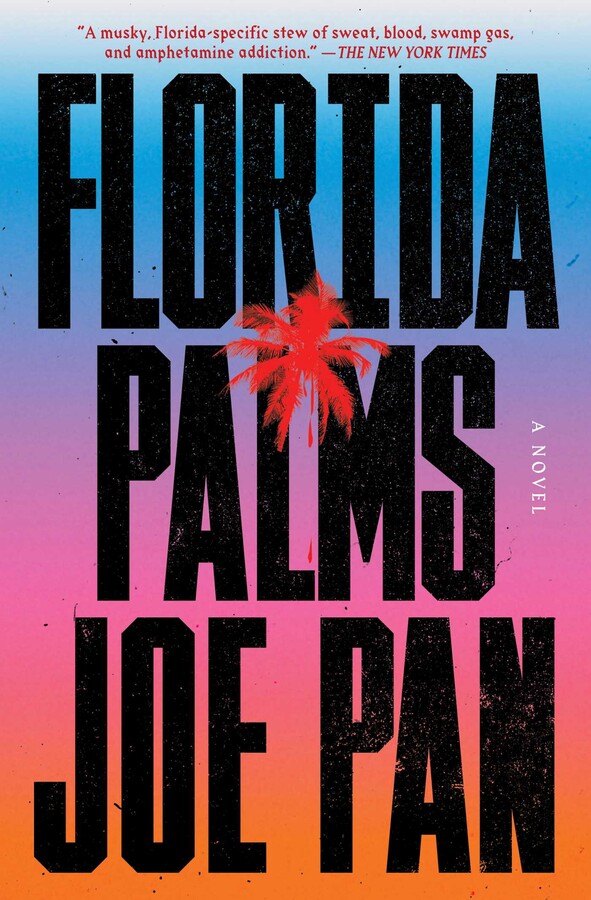
Book Cover Image (jpg): Florida Palms
Trade Paperback 9781668052198
-
Author Photo (jpg): Joe Pan Wendy Millar(0.1 MB)
Any use of an author photo must include its respective photo credit