Plus get our latest book recommendations, author news, and competitions right to your inbox.
Published by Healing Arts Press
Distributed by Simon & Schuster
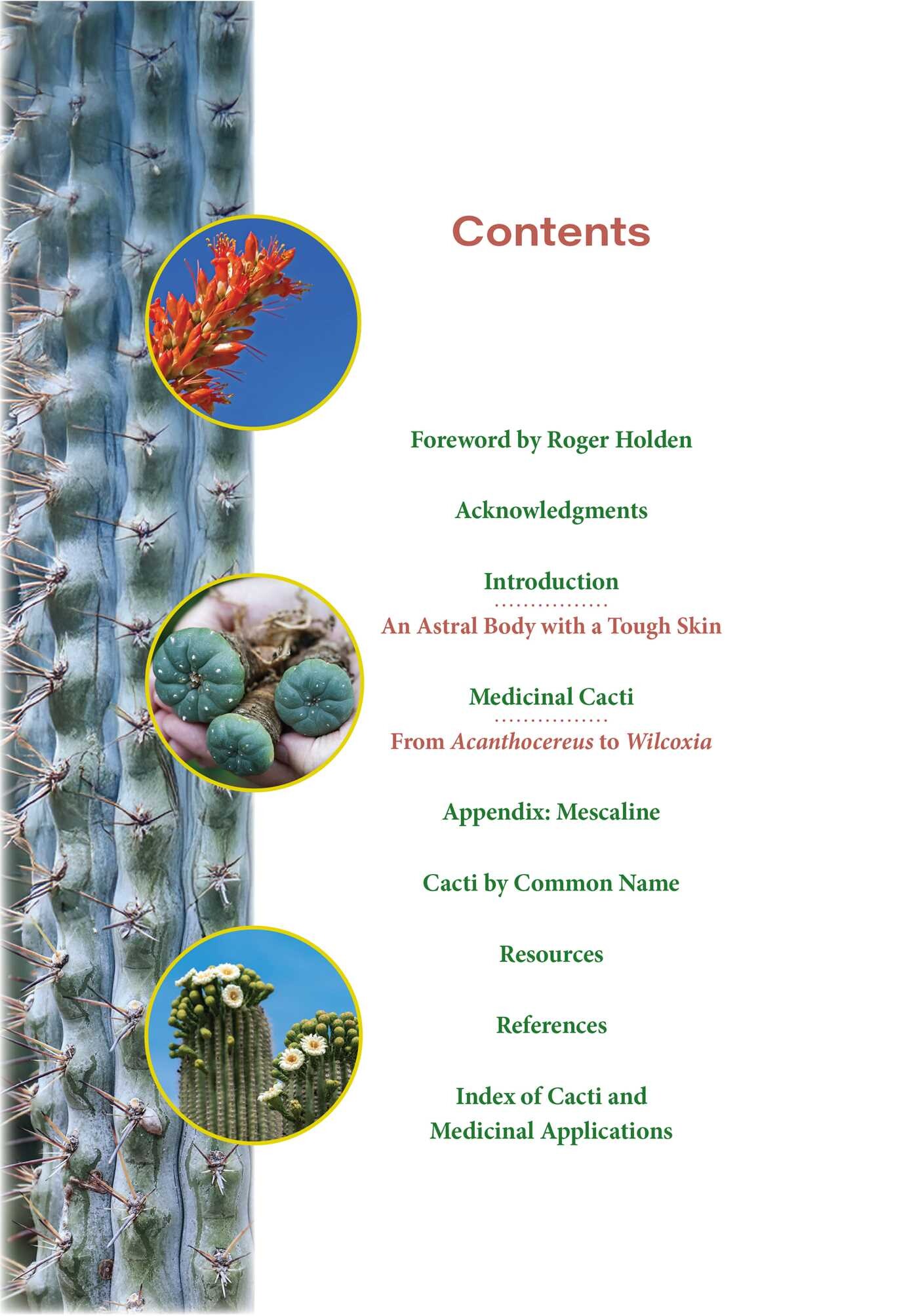
Table of Contents
About The Book
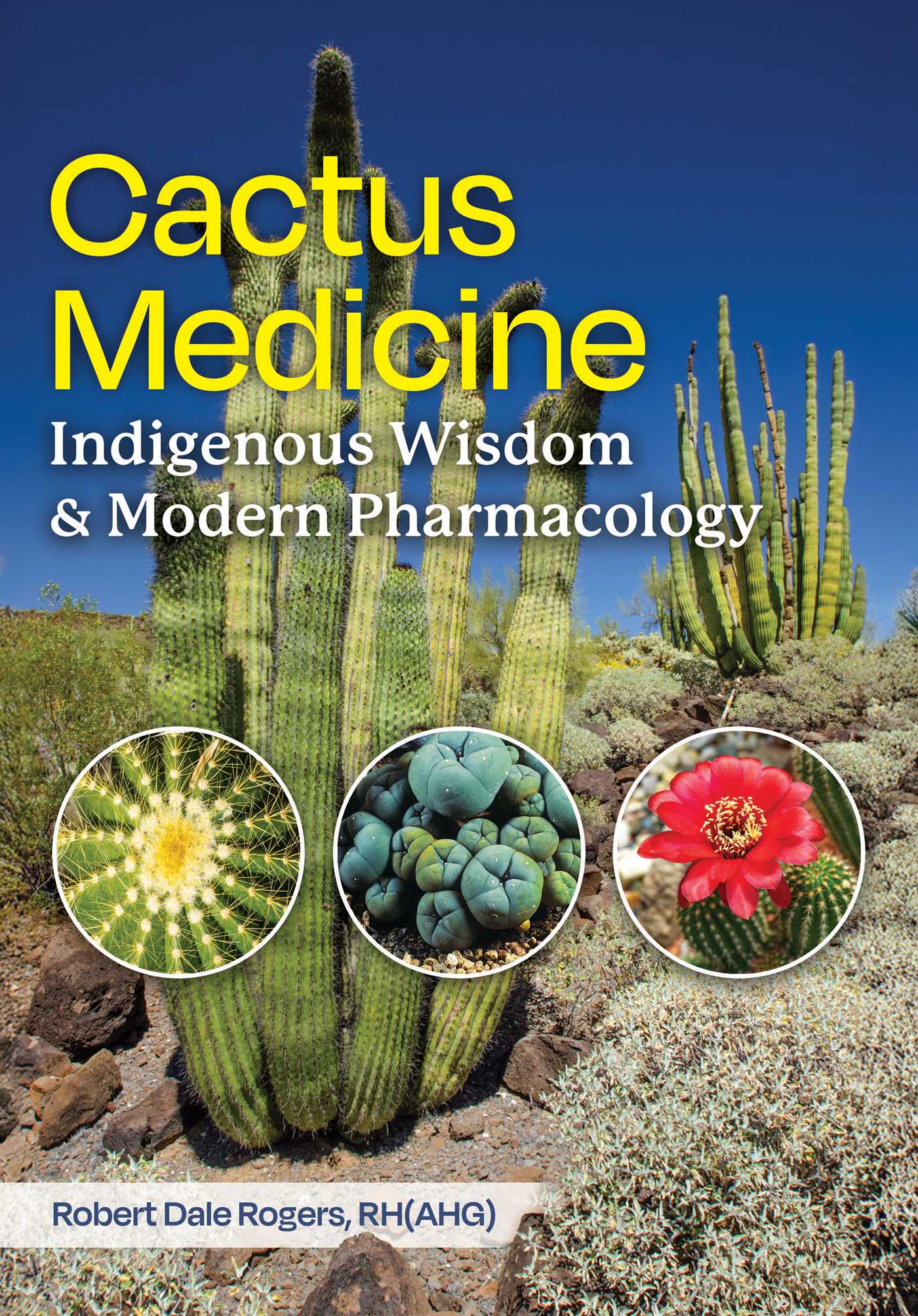
A comprehensive illustrated guide to cacti of North and South America
• Explores the characteristics, medicinal uses, and mythology of more than 570 species of cacti, including well-known species like Saguaro and Prickly Pear and entheogens such as San Pedro and Peyote
• Describes the ways that Indigenous peoples around the world have traditionally used cacti for healing, food, and ceremonial purposes
• Details scientific research on cactus compounds and alkaloids, including antidiabetic, anticancer, antimicrobial, antiviral, antidepressant, and analgesic properties
Cacti, with their iconic spines and thick stems, can be found around the world, though mainly in North and South America. They appear in a wide range of environments, from subarctic to extremely hot desert regions, speaking to their profound ability to adapt, survive, and thrive.
In this full-color illustrated book, Robert Dale Rogers explores more than 570 cacti species through the lenses of ethnobotany, folklore, chemistry, pharmacology, and their effective use in natural therapies. He details scientific research on the medicinal effects of cactus compounds and alkaloids, including their antioxidant, antidiabetic, anti-cancer, antibacterial, antiviral, antidepressant, and analgesic properties. He also looks at the use of cacti in flower essences, herbal preparations, and homeopathic remedies.
Rogers explains how Indigenous people, such as the Cree, have used cacti for healing, food, ceremony, and shamanic purposes for millennia, and he shares sacred stories centered on cacti, such as the Cactus Cat story from the American Southwest. He also provides a psychopharmacological examination of the entheogenic alkaloid mescaline, which can be found in San Pedro and peyote cacti. Showcasing their benefits and unusual beauty, this book reveals how cacti have supported humanity from prehistory to the present day.
• Explores the characteristics, medicinal uses, and mythology of more than 570 species of cacti, including well-known species like Saguaro and Prickly Pear and entheogens such as San Pedro and Peyote
• Describes the ways that Indigenous peoples around the world have traditionally used cacti for healing, food, and ceremonial purposes
• Details scientific research on cactus compounds and alkaloids, including antidiabetic, anticancer, antimicrobial, antiviral, antidepressant, and analgesic properties
Cacti, with their iconic spines and thick stems, can be found around the world, though mainly in North and South America. They appear in a wide range of environments, from subarctic to extremely hot desert regions, speaking to their profound ability to adapt, survive, and thrive.
In this full-color illustrated book, Robert Dale Rogers explores more than 570 cacti species through the lenses of ethnobotany, folklore, chemistry, pharmacology, and their effective use in natural therapies. He details scientific research on the medicinal effects of cactus compounds and alkaloids, including their antioxidant, antidiabetic, anti-cancer, antibacterial, antiviral, antidepressant, and analgesic properties. He also looks at the use of cacti in flower essences, herbal preparations, and homeopathic remedies.
Rogers explains how Indigenous people, such as the Cree, have used cacti for healing, food, ceremony, and shamanic purposes for millennia, and he shares sacred stories centered on cacti, such as the Cactus Cat story from the American Southwest. He also provides a psychopharmacological examination of the entheogenic alkaloid mescaline, which can be found in San Pedro and peyote cacti. Showcasing their benefits and unusual beauty, this book reveals how cacti have supported humanity from prehistory to the present day.
Excerpt
Introduction
An Astral Body with a Tough Skin
Life is tough
But so are cacti.
Unknown
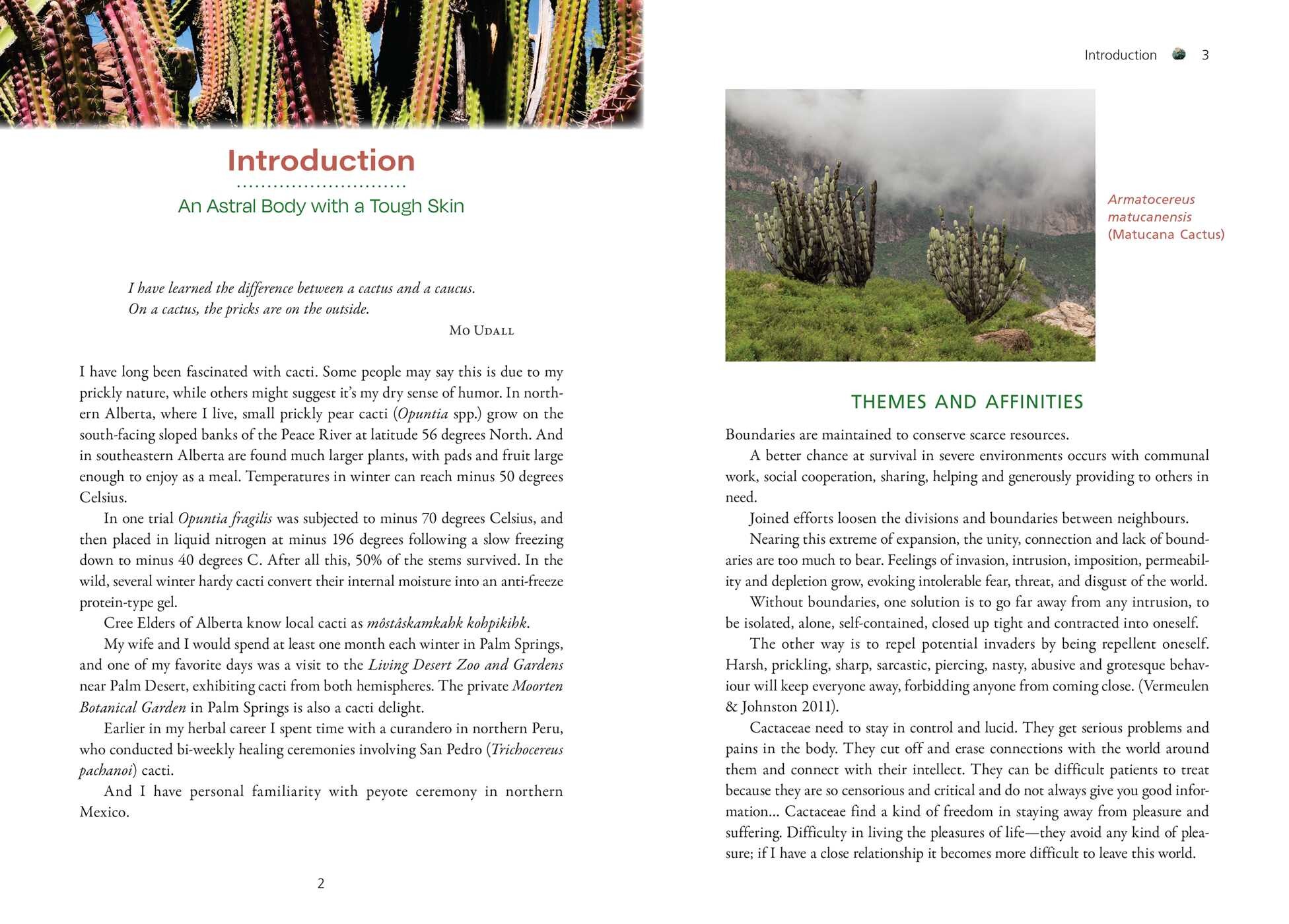
I have long been fascinated with cacti. Some people may say this is due to my prickly nature, while others will probably say it’s my dry sense of humor.
In northern Alberta, Canada, where I live, small prickly pear cacti (Opuntia spp.) grow on the south-facing sloped banks of the Peace River at latitude 56° north. And in southeastern Alberta are found much larger plants, with pads and fruit large enough to enjoy as a meal. In the wild, several winter-hardy cacti convert their internal moisture into an antifreeze, protein-type gel. Temperatures in winter in this region of Canada can reach −58 °F (−50 °C). In one trial, Opuntia fragilis was subjected to −94 °F (−70 °C) and then placed in liquid nitrogen at −320.8 °F −196 °C) following a slow freezing down to −40 °F (−40 °C). After all of this, half of the stems survived! Cree elders of Alberta know local cacti as môstâskamkahk kohpikihk.
My wife and I spend at least one month each winter in Palm Springs, California, and one of my favorite things to do is to visit the Living Desert Zoo and Gardens located in Palm Desert, which exhibits cacti from both hemispheres. The private Moorten Botanical Garden and Cactarium in Palm Springs is also a cactus lover’s delight.
Earlier in my herbal career I spent time with a curandero, a traditional healer, in northern Peru, who conducted biweekly healing ceremonies involving the San Pedro cactus (Trichocereus macrogonus var. pachanoi syn. Trichocereus pachanoi). And I have had personal experiences with peyote ceremonies conducted in northern Mexico.
While in university I was introduced to tequila and mezcal, which are produced from the agave plant. Many people mistakenly believe agave is a cactus, but in fact it is a succulent member of the Asparagaceae family and the Agavoideae subfamily. Likewise for Joshua tree, which is neither a tree nor a cactus, but a member of the same family as agave.
In Mexico, fruit from various cacti species is fermented to produce the alcoholic brew colonche, and some processes involve the addition of pulque, the fermented sap of agave species, as an inoculum. By law, tequila can contain up to 50% ethanol, making it a less desirable choice than mezcal for margarita aficionados.
Various Euphorbia species appear at first glance to be cacti, but they are not. Many of them develop a toxic, yet sometimes medicinal, milky white latex.
The semisucculent, thorny ocotillo (Fouquieria splendens), found in the desert Southwest, is a valuable medicine for pelvic lymphatic issues, but again, it is not a cactus.
During my clinical practice of over twenty years, I became familiar with and recommended Selenicereus grandiflorus syn. Cactus grandiflorus as a homeopathic remedy. And I recommended various cactus flower essences for emotional and spiritual issues, including an essence made from the flower of the saguaro cactus (Carnegiea gigantea), which was offered as a vibrational remedy by the Flower Essence Society.
But this story should start at the beginning, with the evolution of these remarkably hardy and adaptable, drought-resistant plants and their use for food and medicine around the world by Indigenous peoples. The term cacti is derived from the ancient Greek káktos, a name given by the ancient Greek philosopher and naturalist Theophrastus, a student of Aristotle, for a spiny or thorny unknown plant, possibly the cardoon (Cynara cardunculus), an artichoke that may be distantly related to the rose, due in part to its rose-shaped flowers (Earle 1980). Doubtful. The Pereskia genera are known as rose cacti, but with no older scientific taxonomic link to other cacti. Linnaeus, in 1737, categorized cacti in two genera, Cactus and Pereskia, but in 1753 moved them all to the Cactus genus (since renamed Mammillaria), based on 22 species sent from the New World.
By the twentieth century, taxonomists had rejected previous classifications. We now have the subfamilies Pereskioideae (1 genus with 10 species), Opuntioideae (15 genera and 220–250 species), and the Cactus family, Cactaceae, which contains 125–130 genera and 1,400–1,500 species native to the Americas. The sub-family of Cactceae, Cactoideae, contains 11 genera, and about 1,500 species. Mexico alone has nearly 900 species.
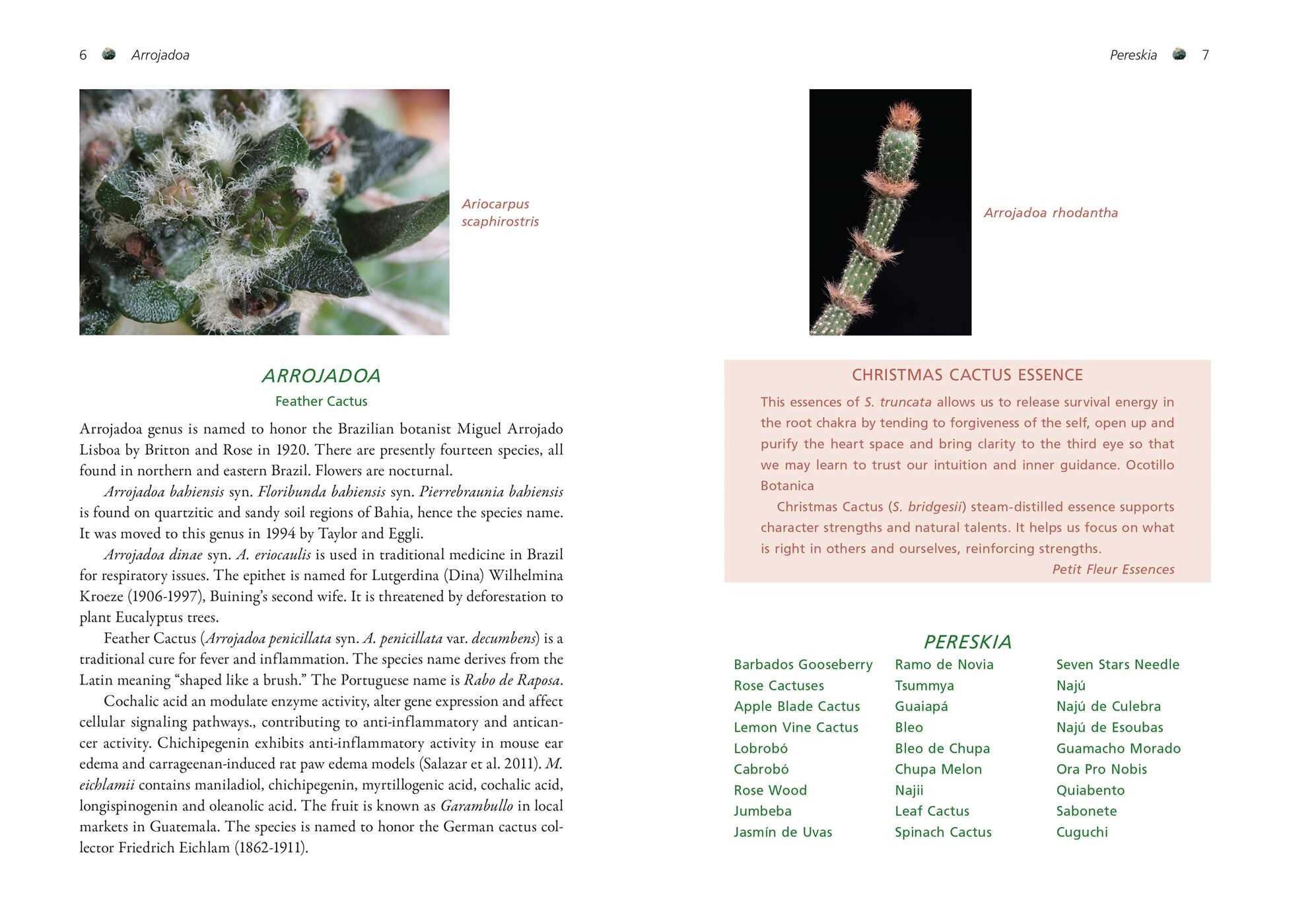
Cacti are known for repelling potential invaders by being repellent oneself. Harsh, prickling, sharp, sarcastic, piercing, nasty, abusive and grotesque behaviour will keep everyone away, forbidding anyone from coming close (Vermeulen and Johnston 2011). They are acclimatized to a wide swath of dry environments, from the Atacama Desert of Chile and ranging up to northern Canada. They are classified as perennial succulents that store water in their thick, fleshy parts, and show a diminution of leaves into spines. Or to be more precise, cacti have areoles, or buds, which can form reduced leaves (spines), flowers, new stems, glands, bristles, hairs, and even adventitious roots. Spines are modified leaves, and thorns are modified branches. They provide shade and protection from herbivorous animals as well as condense moisture in foggy environments, sending it to the roots. Glochids (or glochidia) are hairy, barbed spines found around the areoles that must be removed, along with the spines.
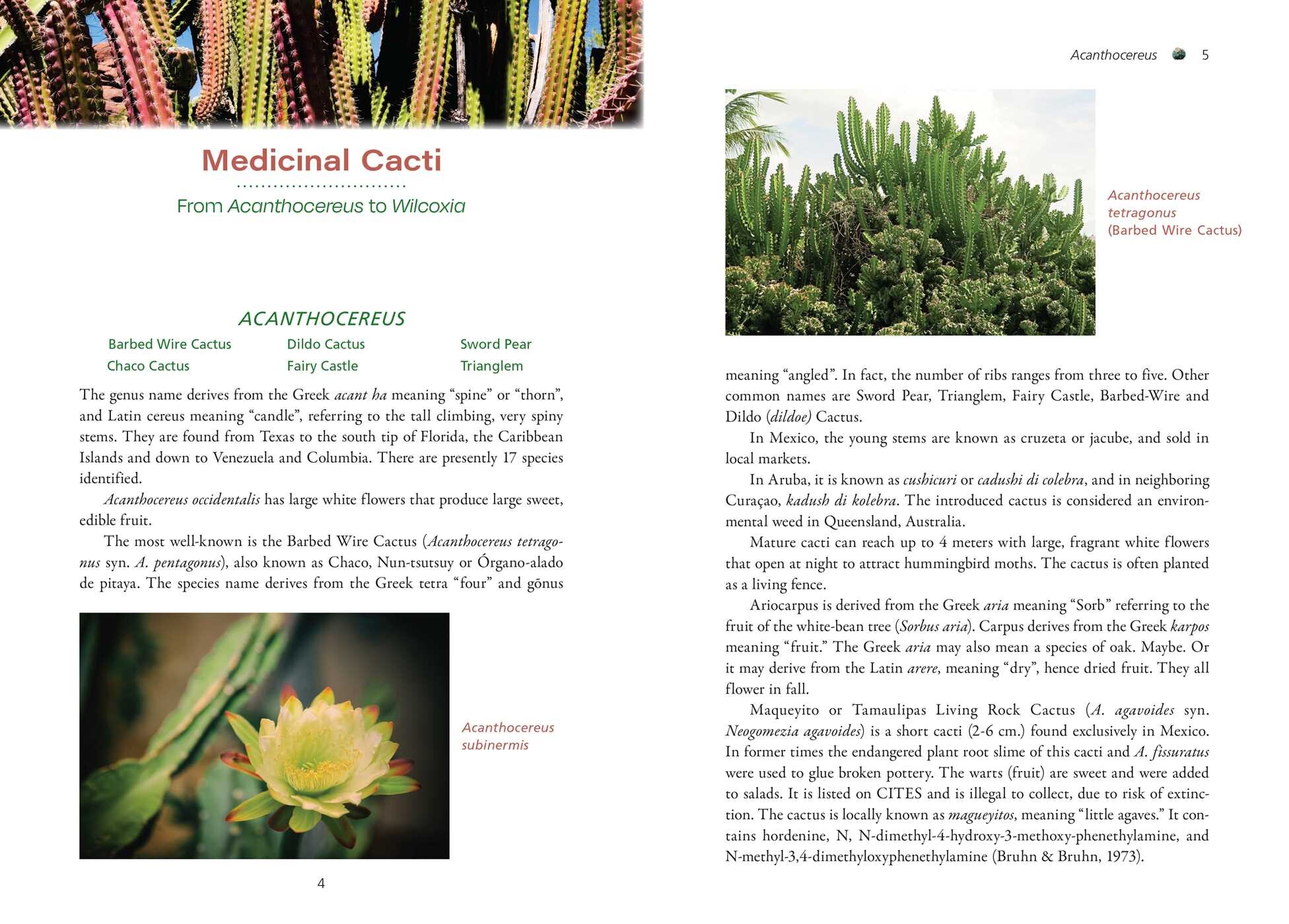
The stems have ribs that follow the Fibonacci sequence of numbers (2, 3, 5, 8, 13, 21, and so forth). To conserve water, respiration occurs at night, with carbon dioxide turned into malic acid for daytime photosynthesis. This method, known as crassulacean acid metabolism, helps preserve moisture by opening stomata at night when temperatures and moisture loss are lowest. The ribs expand when water is available and contract when scarce, like an accordion. As mentioned earlier, cacti can tolerate extremes of temperature ranging from 147–160 °F (64–71 °C) to −40 °F (−40 °C), and even lower. The flat pads, or cladodes, are called nopal or nopales, and in Opuntia species they are considered a choice edible.
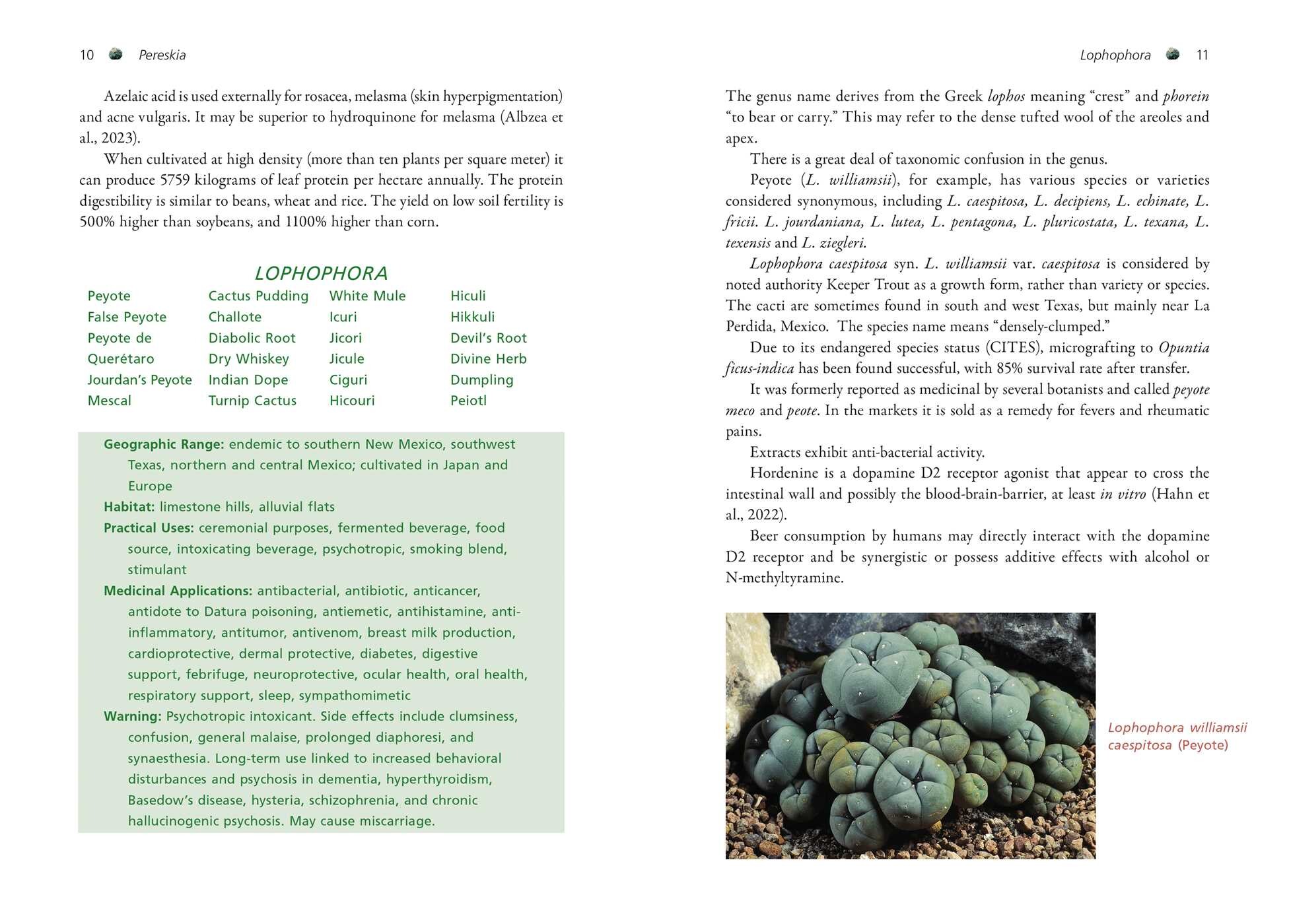
Cacti have two layers of skin. The outer epidermis, or cuticle, is waxy and leathery, preventing water loss and reflecting sunlight. The inner hypodermis provides structure and produces crystals such as calcium oxalate to prevent animals from ingesting them. The spines do a good job of dissuasion as well. They all contain betalains, which give them a green appearance, and they contain higher levels of calcium, magnesium, zinc, copper, and boron than most other plants. Calcium oxalates are also present. Other constituents include pectins; mucilage; tetrahydroisoquinoline alkaloids, including pellotine, anhalonine, anhalonidine, lophophorine, carnegine, gigantine, arizonine, and salsolidine (norcarnegine); and phenethylamines (phenolic alkaloids), including mescaline, hordenine (N, N-dimethyltyramine), and tyramine derivatives in some species. Gigantine, found in Carnegiea species, is not known to be hallucinogenic to humans but has shown such effects in cats and squirrel monkeys. Hordenine, also found in barley, will be discussed later in this book. Mescaline is discussed throughout this book, as well as in Appendix 1.
Cacti range in size from the giant cardon, or elephant cactus (Pachycereus pringlei), which can grow to a height of 63 ft (19.2 m), to the smallest Blossfeldia liliputana, which measures barely 1 cm. Nearly all cacti are found in the Americas, with the exception of Rhipsalis baccifera, perhaps native to the Americas but now found in Africa and Sri Lanka. More recently, some cacti have been introduced to Hawaii, Australia, and the Mediterranean region, with both beneficial and disastrous results, becoming invasive in some cases.
Scientists speculate that the cactus family evolved after the ancient supercontinent of Gondwana split into Africa and South America around 145 million years ago. Perhaps. Other sources suggest their appearance during the Late Cretaceous period, about 90 million years ago, long before the disappearance of dinosaurs. No fossils remain, so there is much speculation and little evidence.
Many cacti are pollinated by bees, bats, moths, and hummingbirds, producing fruits of variable edibility. Some birds eat the fruit and will nest among the protective spines. My wife, Laurie, and I saw the smallest owl burrowed in a saguaro cactus near Tucson many years ago.
Cave paintings in Brazil and seed deposits in Mexico and Peru dating from 12,000 years ago suggest hunter-gatherers collected the fruit of cacti.
The flat-jointed prickly pear fruit from the Opuntia species and other cacti species are commonly known as tunas, cactus pears, or Indian figs. Cacti fruit are also referred to as cactidium, but I will use the term fruit throughout this book. Due to their method of respiration, [the fruits] also contain a considerable amount of plant acid which arises because exhalation is held back. In the process of life, sugar is normally broken down in the process of respiration into carbon dioxide and water. In the succulents, this process of degradation comes to a halt half-way through and plant acids such as malic, tartaric, oxalic and citric acid are formed. (Vermeulen and Johnston 2011, 7)
Of the approximately 850 species of cacti that are native to Mexico, twenty-two have been used in traditional medicine for treating stomachache, gastric ulcers, rheumatism, diabetes, dysentery, obesity, heart disease, pain, inflammation, and diuresis. All parts of the plant have been used, including the cladodes, fruit, and flowers. The inner mucilage of many species has been used as an emollient for skin conditions, providing cool and hydrating benefits. At one time, the thick mucilage was mixed with fat to make candles or was heated down to a concentrate to make a glue or adhesive. In fact, the practical uses of cacti are almost unlimited as you will see in this book.
An Astral Body with a Tough Skin
Life is tough
But so are cacti.
Unknown
I have long been fascinated with cacti. Some people may say this is due to my prickly nature, while others will probably say it’s my dry sense of humor.
In northern Alberta, Canada, where I live, small prickly pear cacti (Opuntia spp.) grow on the south-facing sloped banks of the Peace River at latitude 56° north. And in southeastern Alberta are found much larger plants, with pads and fruit large enough to enjoy as a meal. In the wild, several winter-hardy cacti convert their internal moisture into an antifreeze, protein-type gel. Temperatures in winter in this region of Canada can reach −58 °F (−50 °C). In one trial, Opuntia fragilis was subjected to −94 °F (−70 °C) and then placed in liquid nitrogen at −320.8 °F −196 °C) following a slow freezing down to −40 °F (−40 °C). After all of this, half of the stems survived! Cree elders of Alberta know local cacti as môstâskamkahk kohpikihk.
My wife and I spend at least one month each winter in Palm Springs, California, and one of my favorite things to do is to visit the Living Desert Zoo and Gardens located in Palm Desert, which exhibits cacti from both hemispheres. The private Moorten Botanical Garden and Cactarium in Palm Springs is also a cactus lover’s delight.
Earlier in my herbal career I spent time with a curandero, a traditional healer, in northern Peru, who conducted biweekly healing ceremonies involving the San Pedro cactus (Trichocereus macrogonus var. pachanoi syn. Trichocereus pachanoi). And I have had personal experiences with peyote ceremonies conducted in northern Mexico.
While in university I was introduced to tequila and mezcal, which are produced from the agave plant. Many people mistakenly believe agave is a cactus, but in fact it is a succulent member of the Asparagaceae family and the Agavoideae subfamily. Likewise for Joshua tree, which is neither a tree nor a cactus, but a member of the same family as agave.
In Mexico, fruit from various cacti species is fermented to produce the alcoholic brew colonche, and some processes involve the addition of pulque, the fermented sap of agave species, as an inoculum. By law, tequila can contain up to 50% ethanol, making it a less desirable choice than mezcal for margarita aficionados.
Various Euphorbia species appear at first glance to be cacti, but they are not. Many of them develop a toxic, yet sometimes medicinal, milky white latex.
The semisucculent, thorny ocotillo (Fouquieria splendens), found in the desert Southwest, is a valuable medicine for pelvic lymphatic issues, but again, it is not a cactus.
During my clinical practice of over twenty years, I became familiar with and recommended Selenicereus grandiflorus syn. Cactus grandiflorus as a homeopathic remedy. And I recommended various cactus flower essences for emotional and spiritual issues, including an essence made from the flower of the saguaro cactus (Carnegiea gigantea), which was offered as a vibrational remedy by the Flower Essence Society.
But this story should start at the beginning, with the evolution of these remarkably hardy and adaptable, drought-resistant plants and their use for food and medicine around the world by Indigenous peoples. The term cacti is derived from the ancient Greek káktos, a name given by the ancient Greek philosopher and naturalist Theophrastus, a student of Aristotle, for a spiny or thorny unknown plant, possibly the cardoon (Cynara cardunculus), an artichoke that may be distantly related to the rose, due in part to its rose-shaped flowers (Earle 1980). Doubtful. The Pereskia genera are known as rose cacti, but with no older scientific taxonomic link to other cacti. Linnaeus, in 1737, categorized cacti in two genera, Cactus and Pereskia, but in 1753 moved them all to the Cactus genus (since renamed Mammillaria), based on 22 species sent from the New World.
By the twentieth century, taxonomists had rejected previous classifications. We now have the subfamilies Pereskioideae (1 genus with 10 species), Opuntioideae (15 genera and 220–250 species), and the Cactus family, Cactaceae, which contains 125–130 genera and 1,400–1,500 species native to the Americas. The sub-family of Cactceae, Cactoideae, contains 11 genera, and about 1,500 species. Mexico alone has nearly 900 species.
Cacti are known for repelling potential invaders by being repellent oneself. Harsh, prickling, sharp, sarcastic, piercing, nasty, abusive and grotesque behaviour will keep everyone away, forbidding anyone from coming close (Vermeulen and Johnston 2011). They are acclimatized to a wide swath of dry environments, from the Atacama Desert of Chile and ranging up to northern Canada. They are classified as perennial succulents that store water in their thick, fleshy parts, and show a diminution of leaves into spines. Or to be more precise, cacti have areoles, or buds, which can form reduced leaves (spines), flowers, new stems, glands, bristles, hairs, and even adventitious roots. Spines are modified leaves, and thorns are modified branches. They provide shade and protection from herbivorous animals as well as condense moisture in foggy environments, sending it to the roots. Glochids (or glochidia) are hairy, barbed spines found around the areoles that must be removed, along with the spines.
The stems have ribs that follow the Fibonacci sequence of numbers (2, 3, 5, 8, 13, 21, and so forth). To conserve water, respiration occurs at night, with carbon dioxide turned into malic acid for daytime photosynthesis. This method, known as crassulacean acid metabolism, helps preserve moisture by opening stomata at night when temperatures and moisture loss are lowest. The ribs expand when water is available and contract when scarce, like an accordion. As mentioned earlier, cacti can tolerate extremes of temperature ranging from 147–160 °F (64–71 °C) to −40 °F (−40 °C), and even lower. The flat pads, or cladodes, are called nopal or nopales, and in Opuntia species they are considered a choice edible.
Cacti have two layers of skin. The outer epidermis, or cuticle, is waxy and leathery, preventing water loss and reflecting sunlight. The inner hypodermis provides structure and produces crystals such as calcium oxalate to prevent animals from ingesting them. The spines do a good job of dissuasion as well. They all contain betalains, which give them a green appearance, and they contain higher levels of calcium, magnesium, zinc, copper, and boron than most other plants. Calcium oxalates are also present. Other constituents include pectins; mucilage; tetrahydroisoquinoline alkaloids, including pellotine, anhalonine, anhalonidine, lophophorine, carnegine, gigantine, arizonine, and salsolidine (norcarnegine); and phenethylamines (phenolic alkaloids), including mescaline, hordenine (N, N-dimethyltyramine), and tyramine derivatives in some species. Gigantine, found in Carnegiea species, is not known to be hallucinogenic to humans but has shown such effects in cats and squirrel monkeys. Hordenine, also found in barley, will be discussed later in this book. Mescaline is discussed throughout this book, as well as in Appendix 1.
Cacti range in size from the giant cardon, or elephant cactus (Pachycereus pringlei), which can grow to a height of 63 ft (19.2 m), to the smallest Blossfeldia liliputana, which measures barely 1 cm. Nearly all cacti are found in the Americas, with the exception of Rhipsalis baccifera, perhaps native to the Americas but now found in Africa and Sri Lanka. More recently, some cacti have been introduced to Hawaii, Australia, and the Mediterranean region, with both beneficial and disastrous results, becoming invasive in some cases.
Scientists speculate that the cactus family evolved after the ancient supercontinent of Gondwana split into Africa and South America around 145 million years ago. Perhaps. Other sources suggest their appearance during the Late Cretaceous period, about 90 million years ago, long before the disappearance of dinosaurs. No fossils remain, so there is much speculation and little evidence.
Many cacti are pollinated by bees, bats, moths, and hummingbirds, producing fruits of variable edibility. Some birds eat the fruit and will nest among the protective spines. My wife, Laurie, and I saw the smallest owl burrowed in a saguaro cactus near Tucson many years ago.
Cave paintings in Brazil and seed deposits in Mexico and Peru dating from 12,000 years ago suggest hunter-gatherers collected the fruit of cacti.
The flat-jointed prickly pear fruit from the Opuntia species and other cacti species are commonly known as tunas, cactus pears, or Indian figs. Cacti fruit are also referred to as cactidium, but I will use the term fruit throughout this book. Due to their method of respiration, [the fruits] also contain a considerable amount of plant acid which arises because exhalation is held back. In the process of life, sugar is normally broken down in the process of respiration into carbon dioxide and water. In the succulents, this process of degradation comes to a halt half-way through and plant acids such as malic, tartaric, oxalic and citric acid are formed. (Vermeulen and Johnston 2011, 7)
Of the approximately 850 species of cacti that are native to Mexico, twenty-two have been used in traditional medicine for treating stomachache, gastric ulcers, rheumatism, diabetes, dysentery, obesity, heart disease, pain, inflammation, and diuresis. All parts of the plant have been used, including the cladodes, fruit, and flowers. The inner mucilage of many species has been used as an emollient for skin conditions, providing cool and hydrating benefits. At one time, the thick mucilage was mixed with fat to make candles or was heated down to a concentrate to make a glue or adhesive. In fact, the practical uses of cacti are almost unlimited as you will see in this book.
Product Details
- Publisher: Healing Arts Press (January 12, 2027)
- Length: 448 pages
- ISBN13: 9798888503812
Browse Related Books
Raves and Reviews
“Cactus Medicine is a well-documented synthesis of traditional practice and pharmacological evidence. By placing traditional uses within the scientific frameworks of pharmacology and ethnobotany, this book provides clinicians with a clear roadmap for exploring cactus-derived therapies by illuminating the great potential of therapeutic indications in modern clinical practice. Rogers has written a major contribution to herbal medicine and the wider field of ethnobotany.”
– David Hoffmann, FNIMH, AHG, author of Medical Herbalism, Herbal Intelligence, and The Herbal Handboo
“Comprehensive. That’s the word for Robert Dale Rogers’s treatment of medicinal substances—from lichens to mushrooms to cacti and more. Rogers’s canon is well-researched, scientifically up-to-date, and a very important collection of references for herbalists and researchers in the field.”
– Matthew Wood, author of Holistic Medicine and the Extracellular Matrix and A Shamanic Herbal
“This book by Robert Dale Rogers on cacti—a family of plants too long neglected by herbalists—is a treasure trove for all ethnobotanists. It is a must for anyone who is interested in the use of healing plants by Indigenous peoples, herb cunners, and modern phytotherapists.”
– Wolf D. Storl, PhD, cultural anthropologist and ethnobotanist, coauthor of Witchcraft Medicine, and
“Fascinating insights into the medicinal properties of the cactus family, ranging from First Nations accounts to recent scientific studies. After my long collaboration with Robert Dale Rogers, I am thrilled to see yet another plant family covered in this unique way, combining traditional uses with modern science. If you are interested in the unique pharmacology of cacti and its Indigenous use across North and South America for food, medicine, and spiritual purposes, you should consult this book. Numerous references are included, which can be used as a starting point for further scientific exploration. A must-read for all ethnobotanists and a great reference book for horticulturalists and anyone who is interested in the cactus family.”
– Roland Treu, PhD, mycologist and associate professor of biology at Athabasca University
“Robert Dale Rogers has done it again and created another botanical medicine masterpiece that belongs on every herbalist’s bookshelf! His talent at presenting deep research and experience in the world of medicinal cacti is so beautifully balanced in this book by his engaging, humorous storytelling style.”
– Sam Coffman W-EMT, LAc, author of Herbal Medic and Survival Gardening
“Modern books on herbalism and natural medicine frequently overlook the Cactaceae family; fortunately, Cactus Medicine more than fills the void. This book covers more than 570 species of cacti and provides detailed information regarding the origins of the scientific and local names for each species as well as covers traditional therapeutic uses and the pharmacological bases for these applications. The book is accessible to the novice but also provides plenty of citations for advanced audiences that may want to dig deeper. Rogers’s full-color book will be a welcome addition to the cacti enthusiasts’ library.”
– Kevin Feeney, PhD, JD, cultural anthropologist
“In my entire career, I have never met anyone with the breadth and depth of plant knowledge that Robert Dale Rogers possesses. This deep focus on cacti is yet another remarkable addition to an already extraordinary body of work.”
– Kevin Kossowan, creator of From The Wild
“Wow! I have been working with cacti as medicine for many years and this book is the ultimate, supreme source right now. If you want to learn more about healing, psychotropic, and medicinal cacti, this is an extraordinary resource. Highly recommended.”
– Wouter Bijdendijk, MSc, author of Plant Power
Resources and Downloads
High Resolution Images
-
Book Cover Image (jpg): Cactus Medicine
Trade Paperback 9798888503812