Plus get our latest book recommendations, author news, and competitions right to your inbox.
Published by UNM Press
Distributed by Simon & Schuster
Table of Contents
About The Book
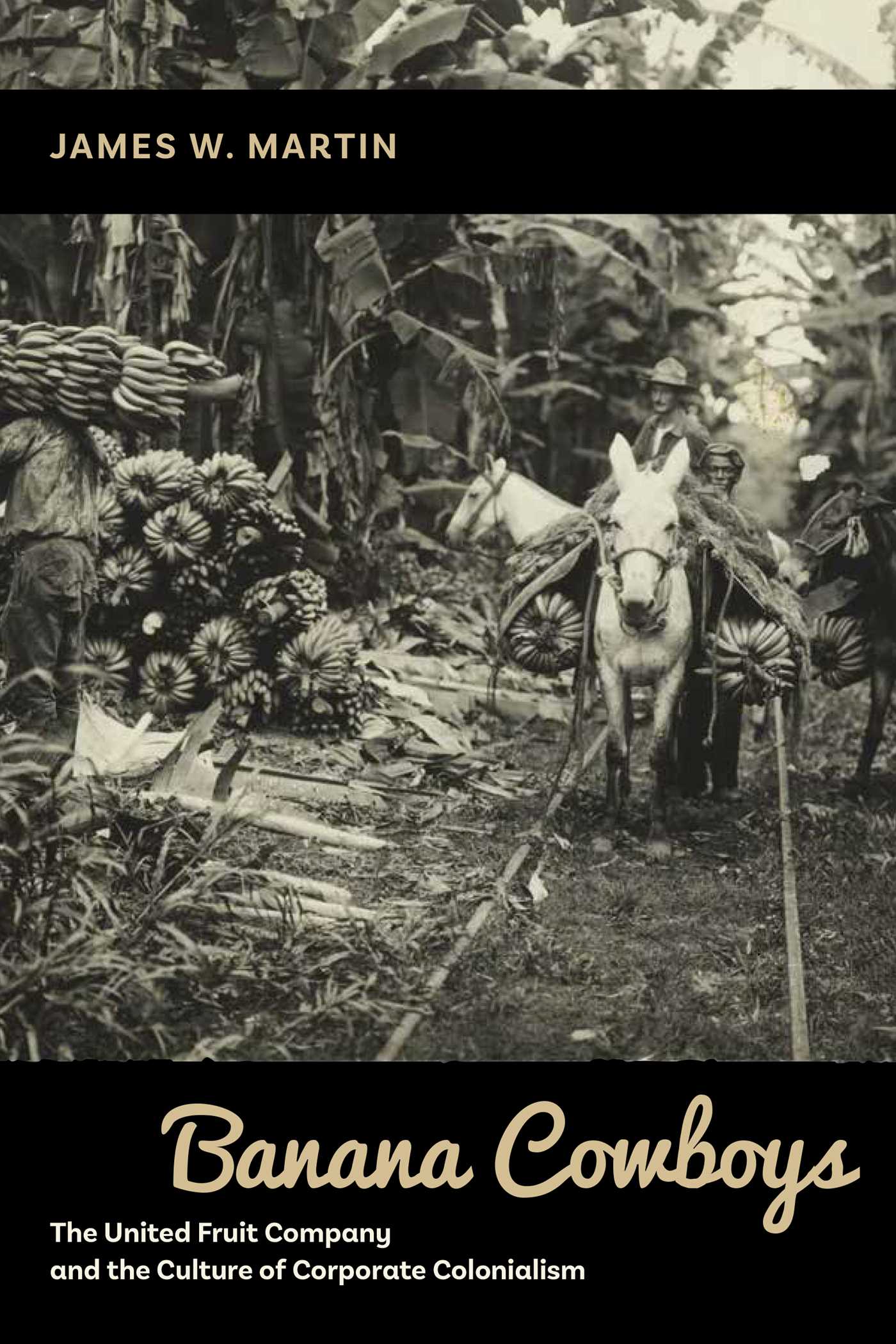
The iconic American banana man of the early twentieth century—the white “banana cowboy” pushing the edges of a tropical frontier—was the product of the corporate colonialism embodied by the United Fruit Company. This study of the United Fruit Company shows how the business depended on these complicated employees, especially on acclimatizing them to life as tropical Americans.
Product Details
- Publisher: UNM Press (May 15, 2018)
- Length: 264 pages
- ISBN13: 9780826359438
Browse Related Books
Raves and Reviews
A complex portrait of the company and its brand of corporate colonialism, its successes, failures, and inherent contradictions.--Diplomatic History
A most engaging and persuasive study of corporate imperialism's complexity. . . . Highly recommended.--Choice
A most engaging and persuasive study of corporate imperialism's complexity. . . . Highly recommended.--Choice
James W. Martin provides a remarkably fresh take on what is arguably the most studied corporation in the history of Latin America--the United Fruit Company.--The Historian
[Banana Cowboys] is richly detailed with elegant prose and makes an innovative, important contribution to scholarship on transnational and business histories and US encounters with Latin America.--The Journal of Arizona History
Martin's readable and well-documented study reveals that the United Fruit Company was a major actor in the process of internationalization a century ago. . . . A special variant of cowboy mythology and the reassertion of the frontier mentality are prominent in the author's explanation of this crucial phase in United States expansion in Central America and the Caribbean.--John Britton, author of Cables, Crises, and the Press: The Geopolitics of the New International Information System in the Americas, 1866-1903
Resources and Downloads
High Resolution Images
-
Book Cover Image (jpg): Banana Cowboys
eBook 9780826359438