Plus get our latest book recommendations, author news, and competitions right to your inbox.
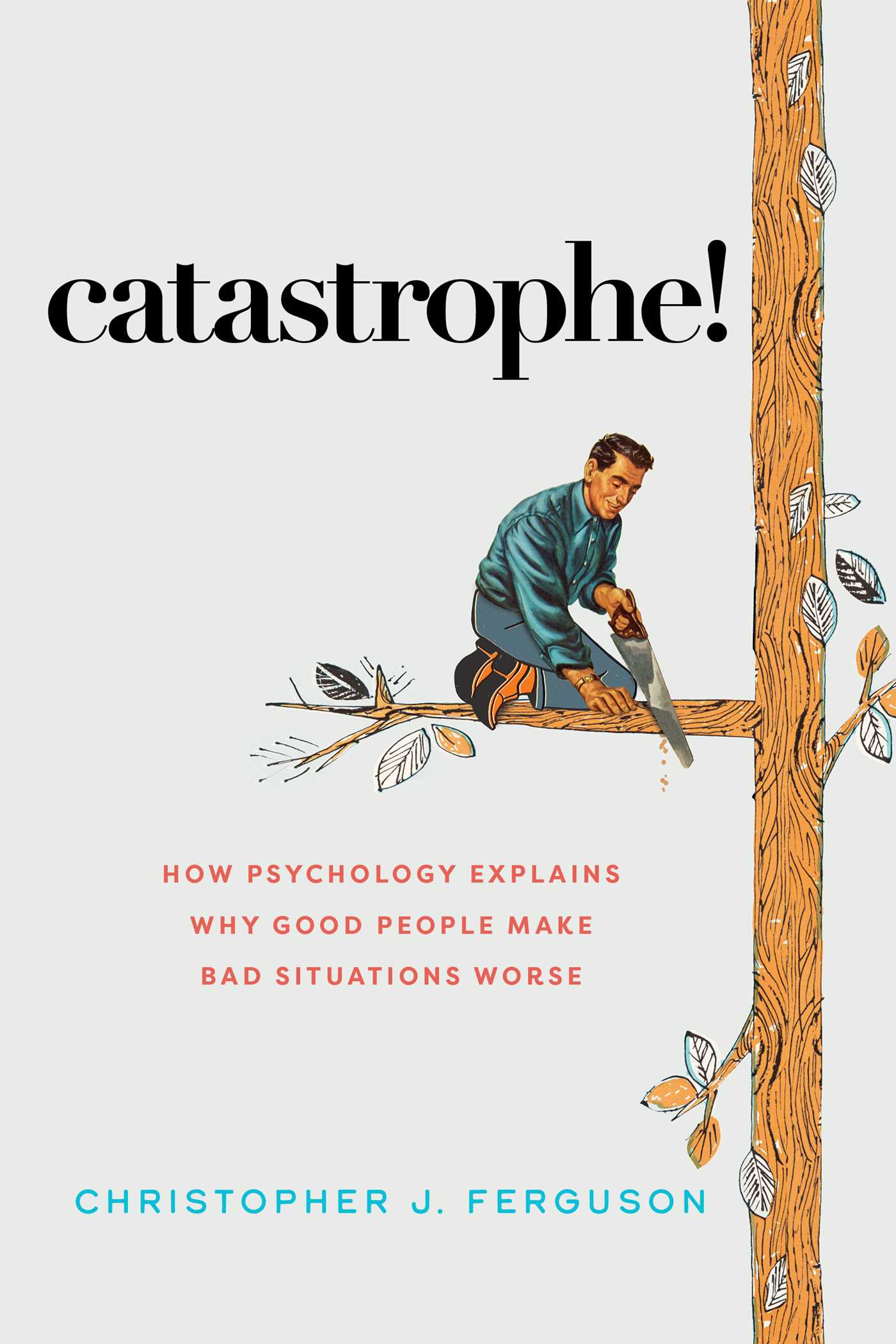
Catastrophe!
How Psychology Explains Why Good People Make Bad Situations Worse
Published by Prometheus
Distributed by Simon & Schuster
Table of Contents
About The Book
What Happens To Our Minds During Pandemics, Natural Disasters, Terrorist Attacks, and Other Extreme Calamities?
Whether natural or man-made, local or global, disasters impact our thinking and behavior on both a personal and societal level. Even rather ordinary crises in our personal lives like the loss of a job or the end of a relationship trigger overwhelming feelings. At the societal level, group anxieties coupled with the moral pressure to conform can send us all down the path to ruin. Why does this happen and, through understanding human psychology, how can we prevent this in the future?
In this highly original and engagingly written book, Author Christopher J. Ferguson examines how pandemics, natural disasters, terrorist attacks, and other events of mass hysteria impact our psychology and prevent us from adequately responding to, preventing, or learning from those calamities.
From the rush to hoard toilet paper during the COVID-19 pandemic lockdowns, to the disconnect between procedure and practice surrounding massive wildfires, to debates about the science behind climate catastrophes, and shifts after traumatic events like 9/11 and the murder of George Floyd, The Psychology of Catastrophe uses in-depth case studies to reveal how moments of societal upheaval affect the psychology of citizens.
Though we have often failed to predict, respond to, and learn from catastrophes, we have nonetheless made remarkable progress. Ferguson concludes by offering strategies to help us make better choices during crises in our own lives and providing solutions for how we as a society can better navigate misfortune in the future.
Whether natural or man-made, local or global, disasters impact our thinking and behavior on both a personal and societal level. Even rather ordinary crises in our personal lives like the loss of a job or the end of a relationship trigger overwhelming feelings. At the societal level, group anxieties coupled with the moral pressure to conform can send us all down the path to ruin. Why does this happen and, through understanding human psychology, how can we prevent this in the future?
In this highly original and engagingly written book, Author Christopher J. Ferguson examines how pandemics, natural disasters, terrorist attacks, and other events of mass hysteria impact our psychology and prevent us from adequately responding to, preventing, or learning from those calamities.
From the rush to hoard toilet paper during the COVID-19 pandemic lockdowns, to the disconnect between procedure and practice surrounding massive wildfires, to debates about the science behind climate catastrophes, and shifts after traumatic events like 9/11 and the murder of George Floyd, The Psychology of Catastrophe uses in-depth case studies to reveal how moments of societal upheaval affect the psychology of citizens.
Though we have often failed to predict, respond to, and learn from catastrophes, we have nonetheless made remarkable progress. Ferguson concludes by offering strategies to help us make better choices during crises in our own lives and providing solutions for how we as a society can better navigate misfortune in the future.
Product Details
- Publisher: Prometheus (November 15, 2022)
- Length: 258 pages
- ISBN13: 9781633887961
Browse Related Books
Resources and Downloads
High Resolution Images
-
Book Cover Image (jpg): Catastrophe!
eBook 9781633887961